In the Fall of my Senior year in high school, we were asked to begin the process of deciding what we wanted to do in the next phase of our lives. We had already taken the SATs, and our GPAs and class rankings weren’t going to change much. We all took the career preference test that showed us what kind of jobs we’d be suited for psychologically. Mine was forest ranger and artist. I was pretty much seen as a mediocre student with creative potential. I shined on stage, but there was still that innate drive I had to create images, music, and art. The day came for all students to attend at least one career day session. Career Days were set up by the guidance counselors as a way to make students decide what they want to do with their lives. So a collection of real workers in a variety of fields were invited to come to the high school to provide real-life accounts of their jobs – the good and the bad. I picked two to attend. Drama and Television Production. The man from Trenton State College’s drama program relayed a pretty depressing picture.
- Only 4% of all people who call themselves professional actors make above the poverty level.
- You will audition your entire life.
- You have to be an excellent actor with a lot of training, and even then, you have to be very lucky to make a living.
- You will have to move to either New York City or LA and live like a pauper to be in the game.
- There is no pension or retirement program, and unless you join the union, there are no benefits.
On the other hand the two men from New Jersey Public Television talked about the future of television.
- Cable TV is going to enable up to 30 channels to be seen around the country. (At the time there were only 6)
- Television was going to grow so that every room in the house was going to have a set.
- TV cameras and video tape recorders will become small and portable.
- Video editing equipment will be less expensive and easier to operate.
- TV’s were going to get larger and larger. The largest sets at the time were 21″.
- There was going to be a time soon when people at home will be able to record TV shows.
- TV was going to be produced by schools, companies, and government agencies.
- Live TV was going to be a common thing shared around the world.
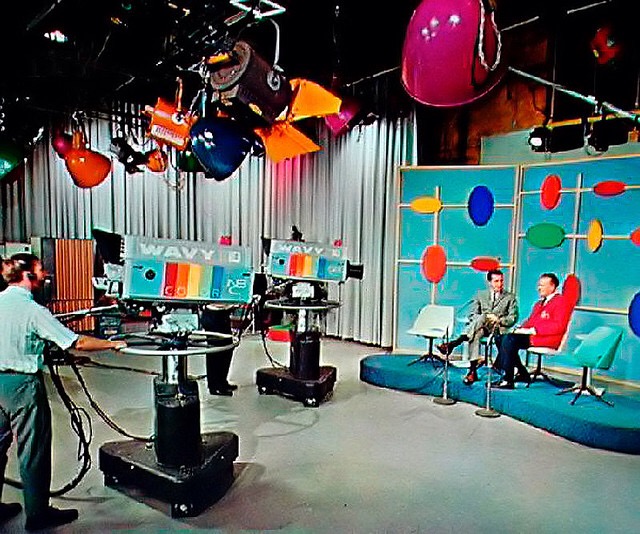
The message was, business is booming and the horizon looks bright for video production. They even shared that Mercer County Community College had one of the only TV Production programs of study in New Jersey. They taught film, photography, and audio production there as well. Needless to say, I had a direction and a career path set by the end of the year. My Great Aunt Priscilla sent me college catalogs for Syracuse, Missouri, and other good communications schools to spawn my interest. But by that time I was with Robin, and I couldn’t see myself being apart from her for school. Looking back, even after attending that career day as an impressionable 17 year-old, I worried that many of their TV predictions were fanciful, pie in the sky, science fiction-based hyperbole. Now of course, it’s clear they underestimated the eventual growth of the industry and the capabilities enjoyed by all of us. Forty-five years later, we all have the ability to record and broadcast high-definition video from a device in our pockets.
 marcorton8853