Mom’s Many Projects

I imagine being a housewife in the 1960’s was a pretty monotonous job. Sure there was cleaning, laundry, food preparation, and shopping, but beyond that, many women watched soap operas, took up tennis, or gardened in the yard to stay mentally engaged. Mom’s love was projects. Once she had an idea, she would dive into it head first and be a cyclone of energy pursuing her goal. There were three that I remember her doing when I was growing up. One was panelling the living room and hallway of our house. In the 60’s, someone came up with the invention of using pressed wood products and printing a wood look pattern on it so it could look like real wood panels. Every common living area wall in our house was panelled except the kitchen. The Den, Living Room, Hallway, and Dining Room all had the vertical wall covering. (The only room that had actual wood panels was our Library which was built in the 50’s.) These panels came in 4′ X 8′ sheets and came in a variety of faux wood colors from rough-hewn blonde, to shiny dark oak. Mom decided she was going to install the panelling and so every day we came home from school more and more of the rooms were done. Eventually she required the help of a carpenter who came by to do the finish work, but she did it without the help of by any of us or Dad. Another one she tackled was a cookbook. Not any cookbook mind you, but one that was innovative in the information that was included, and the way they were stored and accessed. The information not only included the standard recipe instructions and ingredients on plastic-coated flip cards, but also the cost per person, the actual time for preparation, and a quality rating. The quality rating was a “scientific” survey that was done when she served every dish. For the most part, we were all her guinea pigs. So for a period of about two years, Mom served us a diet of eclectic food that we had to rate every night. She would gather the results and go on to the next recipe. I remember smelling the roast at the Ward’s house and hinting to him I’d like to eat over because I knew Mom was serving Coq au Vin, which I was sure to hate and give a thumbs down to. When Robin and I were married years later, Mom surprised us with a set of the cookbooks, which we cherish today. The third project I remember was the establishment of a Youth Hostel chain in the US. It was based on the hostels found in Europe at the time, because  she saw how difficult it was for youngsters travelling in the US to find a cheap and safe place to sleep at night. She did floor plans, estimated the cost of running each hostel, and even tried to decide where the inexpensive inns would go around the country. In all these projects, she put her whole soul into it. She made graphs, charts, and worked late into the night. I always went to bed before her. It was not unusual to see her slaving away at two o’clock in the morning, Carlton cigarette in mouth, cold coffee on the card table, surrounded by a dozen well-labelled binders, writing notes with her mechanical pencil.  

 As she got older, Mom continued to always have a passionate project in the works. She became a bookkeeper, and found interest in growing marijuana, leading naturist clubs, and even became a professional masseuse, becoming well-known for her original strokes which she demonstrated around the world at workshops, in videos, and publications. I often ask myself, how did Mom get to be a “pioneer woman?” She seemed fearless, adventurous, and willing to push herself to make the world a better place. The answer I come up with is a combination of necessity, a Kansas upbringing by a couple of enterprising parents, and the confidence she had in herself to make a difference. There’s a bit of Mom’s personality in Robin. I believe that’s what intrigued me when I first saw her, and why I continue to enjoy her company every day.
Lisa Peesa

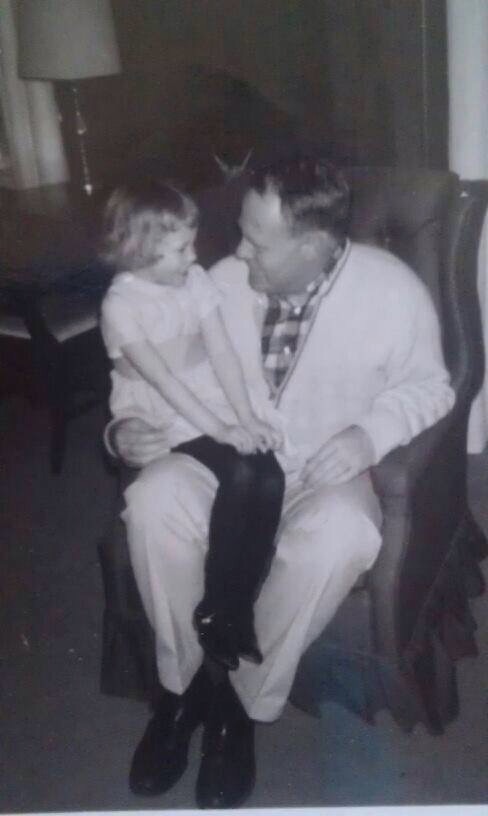
 My little sister Lisa really changed our family when she arrived. She was a baby. She was a girl. And at first we didn’t know what to do with her. Having never really spent time around infants, we boys were inquisitive and fairly flexible with the new addition. Mom was a housewife, and therefore our new sister didn’t require a lot of effort on our part or take up any of our space. One thing that did change as Lisa moved into tottlerhood, was the competition between the brothers for her attention. “Hey Lisa,” we would say, “who’s your favorite brother?” She would say the name of whomever tickled her fancy that moment. Even though as boys we were known to rough house and tease each other quite frequently, we figured we had to treat Lisa differently – making her cry for any reason was never a good thing, particularly when Dad was around. One day Kent was acting up about something, and he pushed 4 year-old Lisa so hard she hit her head on the coffee table and started to wail. Mom got upset and Dad quickly grabbed Kent and dragged him into the master bedroom and slammed the door. All of us waited outside to see what would happen. There was quiet, and then “BANG!!, ” there was the loudest noise I ever heard inside the house. A minute later Kent emerged from the room crying. He walked over to Lisa and apologized and then went on to his room. Dad then told Brad and me to go into his bedroom to see something. In my parent’s wall was a fist-sized hole. Dad looked at us and said he punched this hole in the wall, and the next time anybody hurts Lisa, this is what he’s going to do to us. He also said it would be Kent’s job to patch it up and paint it.  I remember Lisa having a few temper tantrums in the grocery store, and one instance when she saw an African-American man for the first time. She pointed at him, laughed, and said out loud “Mommy, look at that silly man with the black all over his face!” Mom was so embarrassed she literally grabbed her and ran out of Shop Rite. For the most part though, Lisa was very quiet and shy. She was quick to smile, but you also knew when she wasn’t happy. She had a great laugh that was our reward when we played with her and competed for her attention. We used to play tickle games with her. One was “LaBonza” and the other was “Clawhold.” Both required us to say the word over and over again as we moved closer to her. She would panic, and then we would tickle her. “LaBonza” was a tickle mostly in the stomach, while “Clawhold” was focused on her sides. Mom seemed to really enjoy raising a girl and Dad was over the moon with his little “Lovable Type”, as he often called her. We thought it was pretty cool too, having a sister. As time passed, life would take many turns and we would all take turns watching out for her and protecting her as she went through the stages of childhood. Now living in New Mexico, Lisa married her soul mate Nick Arge and have a son of their own, Alexander. A side note about the hole in the wall story. Dad later admitted he didn’t check where the studs were in the wall before he punched it. He would’ve easily broken his hand.

Career Day

In the Fall of my Senior year in high school, we were asked to begin the process of deciding what we wanted to do in the next phase of our lives. We had already taken the SATs, and our GPAs and class rankings weren’t going to change much. We all took the career preference test that showed us what kind of jobs we’d be suited for psychologically. Mine was forest ranger and artist. I was pretty much seen as a mediocre student with creative potential. I shined on stage, but there was still that innate drive I had to create images, music, and art. The day came for all students to attend at least one career day session. Career Days were set up by the guidance counselors as a way to make students decide what they want to do with their lives. So a collection of real workers in a variety of fields were invited to come to the high school to provide real-life accounts of their jobs –  the good and the bad. I picked two to attend. Drama and Television Production. The man from Trenton State College’s drama program relayed a pretty depressing picture.

  • Only 4% of all people who call themselves professional actors make above the poverty level.
  • You will audition your entire life.
  • You have to be an excellent actor with a lot of training, and even then, you have to be very lucky to make a living.
  • You will have to move to either New York City or LA and live like a pauper to be in the game.
  • There is no pension or retirement program, and unless you join the union, there are no benefits.

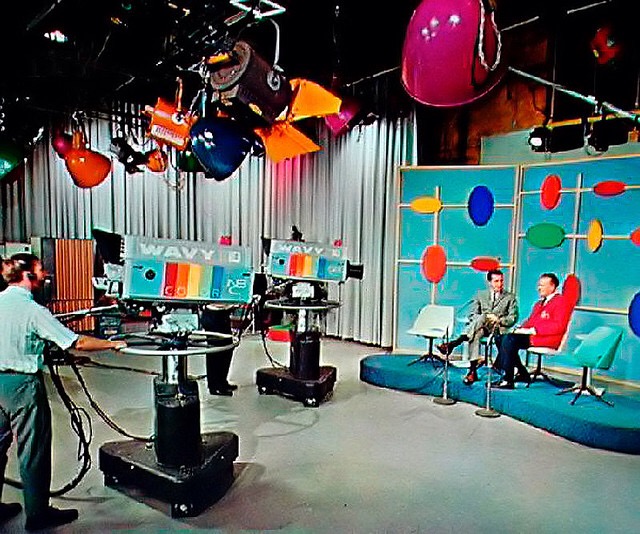
On the other hand the two men from New Jersey Public Television talked about the future of television.

  • Cable TV is going to enable up to 30 channels to be seen around the country. (At the time there were only 6)
  • Television was going to grow so that every room in the house was going to have a set.
  • TV cameras and video tape recorders will become small and portable.
  • Video editing equipment will be less expensive and easier to operate.
  • TV’s were going to get larger and larger. The largest sets at the time were 21″.
  • There was going to be a time soon when people at home will be able to record TV shows.
  • TV was going to be produced by schools, companies, and government agencies.
  • Live TV was going to be a common thing shared around the world.

The message was, business is booming and the horizon looks bright for video production. They even shared that Mercer County Community College had one of the only TV Production programs of study in New Jersey. They taught film, photography, and audio production there as well. Needless to say, I had a direction and a career path set by the end of the year. My Great Aunt Priscilla sent me college catalogs for  Syracuse, Missouri, and other good communications schools to spawn my interest. But by that time I was with Robin, and I couldn’t see myself being apart from her for school. Looking back, even after attending that career day as an impressionable 17 year-old, I worried that many of their TV predictions were fanciful, pie in the sky, science fiction-based hyperbole. Now of course, it’s clear they underestimated the eventual growth of the industry and the capabilities enjoyed by all of us. Forty-five years later, we all have the ability to record and broadcast high-definition video from a device in our pockets.

Making beautiful music together

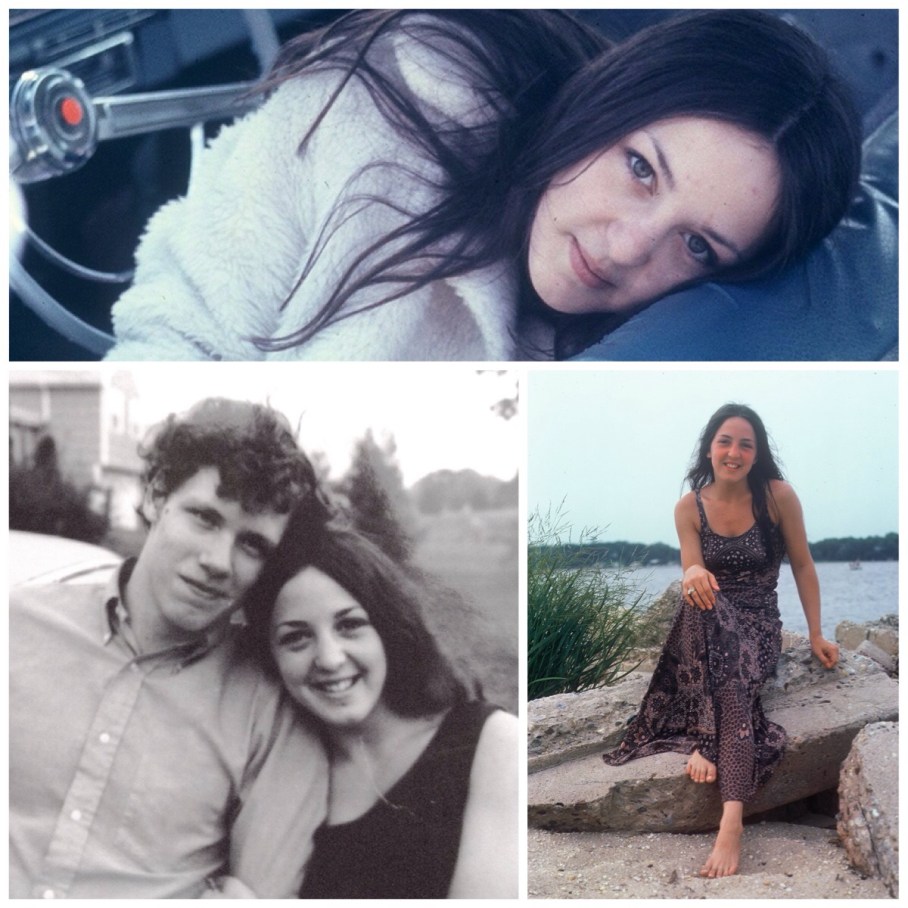
I found out that popular girl in the hall was Robin Snyder, sister of one of my classmates, Holly, who I would get to know by being in plays in my Junior and Senior years. I continued to see Robin in the halls and had a chorus class with her when I was a Junior. I recalled that she was once Mark Ward’s brother Keith’s first girlfriend who had listened to my rock band play one of our first gigs at the Ward’s house. She hung around with jocks and cheerleaders and seemed to always be happy. She was very short and petite with mid-length super shiny thick straight black hair parted in the middle, bright green eyes, rosy cheeks, and braces. Robin was one of those girls who wore very short miniskirts and dresses. I chatted with her a little bit when I was in The Crucible as her sister had a role in the play. Robin, at 15 years old, would hang around during rehearsal to ride home with Holly. After one of the productions, I’ll never forget, Robin came up to me and gave me a hug and told me how good I was. There was something magical about it. It felt comfortable, genuine, and fantastic. There had been a lot of girls I had hugged up to that point in my life, but that embrace was special! I saw Robin a few days later in the hallway when she invited me to Holly’s surprise birthday party, which I was more than happy to accept. I arrived at her house after school and along with many other friends, surprised her sister as she walked home from the bus. While the party was going on I never left Robin’s side. I found out she loved music. She played the guitar for me and sang songs by Joan Baez and Joni Mitchell. What a beautiful voice! She told me about her time in England as a governess, her pets, and that she taught autistic kids at Trenton State College on Saturdays. She said that she and Joel had broken up. Through all that, Robin was modest and built up my ego along the way. Here I found a cute, caring, musical girl. Long dark hair with green eyes. Literally a girl of my dreams. What’s not to love? So I saw her every chance I could in the hallways. The homecoming basketball Pep Rally and bonfire was coming up and I wondered whether or not she’d come with me. The day of the big event, I walked her around as I always had, and even escorted her to the bus, but I just couldn’t muster the courage to ask her. Robin was so popular and so perfect. Finally when I got home, I dialed her house 466-0567. Here is a transcript:

Mom Snyder: Hello, Snyders.

Me: Um. Hello. Could I speak to Robin? Is she there?

Mom Snyder: Yes she is, may I ask who’s calling?

Me: This Marc. Marc Orton

(Pause)

Mom Snyder: I’ll see if she’s available. Please hold on.

(Muffled phone, I hear Holly in the background talking to her mother but I can’t make it out. Voices are raised. It appears there’s a problem. My thoughts race. Is Joel back in the picture? Are her parents weird? Did I make Robin mad by not asking her at school? Has another guy asked her to go?)

Holly: Hi Marc, this is Holly. Hold on Marc, I’ll get her. (more muffled talking – I was preparing for the worst)

Robin: Hello?

Me: Hi Robin. How are you doing?

Robin: Good.

Me: Listen. Are you going to the parade and the bonfire tonight?

Robin: Yeah. Bill Louden is going to drive his cool yellow hearse in the parade, so me, Tina and Sharon Morewood thought it would be fun to ride in the back.

Me: Cool. I think the parade is supposed to start at the Grammar school. Do you want to meet up there?

Robin: Um. (pause) Sure. Okay.

Me: Great. I’ll find you at the Grammar school around six.

Robin: Alright. That’ll be good. I’ll be by Bill’s hearse.

Me: Great. See you then.

I was on cloud nine. I picked her up in Mom’s 1966 light blue Chevy Biscayne, and together on the bench seats we drove with the parade up Main Street, left on Delaware Avenue all the way to the high school. After the bonfire and Pep Rally, I brought Robin back to my house and it was my turn to play music for her on my piano to show her I could play music and sing too. She called her dad to pick her up, and as she walked out the front door I attempted an awkward kiss. All that practice, and when it really counted with the perfect girl, I blew it. So embarrassing! But we chuckled about it and I saw her pretty figure running to her Dad’s car in the night.

From that moment in the fall of 1970 for the next thirteen years, through high school, summers, college, and various jobs, we spent time with one another each and every day. And as of this writing, 2015, through all the work and family responsibilities, we have made a point of at least talking to one another every day since that Pep Rally.

High School Girls

When I was a Freshman in high school, I was disappointed that almost all the girls in my class were hit on by the boys in the older classes. After Kathy, my first part-time girlfriend was Rachel. She was my same age and extremely smart and ran around with that crowd in the halls, barely noticing I existed in school, but when we saw each other at the canteens we would be together all night, slow dancing and kissing. On Monday again, I would be a persona non grata. Needless to say this confused the hell out of me, but it just reinforced my sense that girls were from outer space, never to be understood. But by the time I was a Sophomore I delighted in checking out the new 9th grade girls coming in. That’s when I decided it was a good idea to take some pride in my looks. I watched Brad and saw how he used his personality to gain the attention of girls. I checked out how girls reacted to certain things in class and at lunch. Later I dated a girl name Joan. She did not possess the mental horsepower the other girls had, but she built up my ego, which felt particularly good at that time in my life. Personality-wise we did not mesh well. She had no interest in any of the things I was interested in, so the relationship just died, and we moved on. There were several flirtations with other girls that lasted a day, or a week, but nothing that truly caught on. When walking along the halls, you witnessed all kinds of relationships come and go, the basketball star and the cheerleader, the hood and the minister’s daughter. Certain people had charisma. Like a moth to a flame, people gravitated to them. Others were like wallpaper. No one notices them until they can’t climb the rope at gym class. That’s when I first realized something that has stayed with me my whole life: We all live complicated lives. What we see of people when we pass is fleeting. It is a snapshot in time. Inside their brains are frustrations, stresses, thoughts, desires, plans, and insecurities. They all have relationships with relatives, friends, pets, enemies, and competitors. This is dancing in every brain of every human being on earth. It’s this thinking that keeps me from being prejudice and from seeing girls as just objects. As human beings, they too live complicated lives. And I don’t have the smarts to understand it all, including the time Rachel ignored me in the halls, but was so passionate at the dance. I’d like to ask her someday, but unfortunately one year after she graduated early from high school, she was murdered by her boyfriend. Throughout high school I continued to watch and study my classmate’s behavior. There was one girl I noticed that was one of those people who attracted a gaggle of people around her. Always laughing and smiling. Friendly, nice, and cute. But alas she had a boyfriend, in fact a guy I used to hang around with in the early years. Joel and I used to race each other in the playground, competed for spots in the barber shop quartet, and both worked as artists for the yearbook. He was also a varsity wrestler. Who is that girl? Why am I intrigued with her?

On the Job

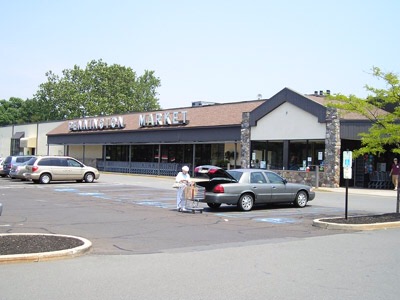
Because we didn’t get an allowance after age 15, we had to get jobs to pay for stuff. We all mowed lawns for neighbors. Brad got a job as a bus boy at Charley’s Brother in Hopewell. I picked apples at Rocktown Orchards. Kent worked the night shift at Pennington Quality Market (PQM) grocery store. In a crazy way we all kind of helped each other make money. I got Brad working at the orchard during its peak season. He helped me get a busing job at Charley’s Brother, and Kent played a role in getting me a summer job at the market. So during the school year, I would work at the restaurant Saturday and Sundays, and in the summer I spent 40 hours a week working in the produce department at PQM.  The busing job was pretty basic. I arrived there about 2:00 p.m. I would go into the cooler and pull out the lettuce. We would break up the lettuce and soak in some sort of chemical that would preserve it. Then we would melt a large pot of butter and add some garlic and oregano to it. Cut a dozen of loaves of bread. When the butter melted, we would dip the pieces of bread in the butter and place them on cooking sheets. and put aluminum foil over them. We would then set up the bus station: place silverware in each glass, ready to be used. We then had to put red table cloths on all the tables, light the candles, and made sure each seat had a place mat and napkins. We then had to help set up set up the Salad Bar. Once the guests arrived it was all about keeping water glasses filled, getting the used plates off the table, clearing and setting up tables, and checking the salad bar. It was a busy eating spot, so you ran the whole time. The kitchen was run and staffed by hard-working members of the same Asian family from Communist China. When the night was over, we would put everything away, sweep and mop the kitchen, vacuum the dining rooms, and wait while the waitresses doled out the cash tips we received every night. PQM was a different affair. Got there at 7:00 a.m. sharp, unloaded the daily trucked-in delivery of produce and stocked it in the produce room or cooler. Took inventory and then wrapped fruits and vegetables the entire day. Most produce was wrapped and weighed. Tomatoes, bananas, blueberries, celery, asparagus. Most of the time I spent cleaning and wrapping lettuce. Case after case. Day after day. The department was run by Roger Reamer, brother of the store manager. The ladies were very nice to work with, and the only other guy was John Olson. A retired milk man, who had a work ethic that was unbeatable. He used to say to me, “I don’t worry about dying. I figure when your name is at the top of the page, it’s your time to go.” He and a lot of the people who worked there were real down to earth, hard-working, salt of the earth kind of people. And I thought they were great! One woman would get in trouble because she never cashed her paychecks. Her frugal husband, a retired farmer, refused to use her money to pay the bills so she just worked to stay busy. For the most part though, doing these jobs only cemented in my brain the importance of getting an education that meant I could make good money, doing what I want to do, and something I was particularly suited to do.

Good Show

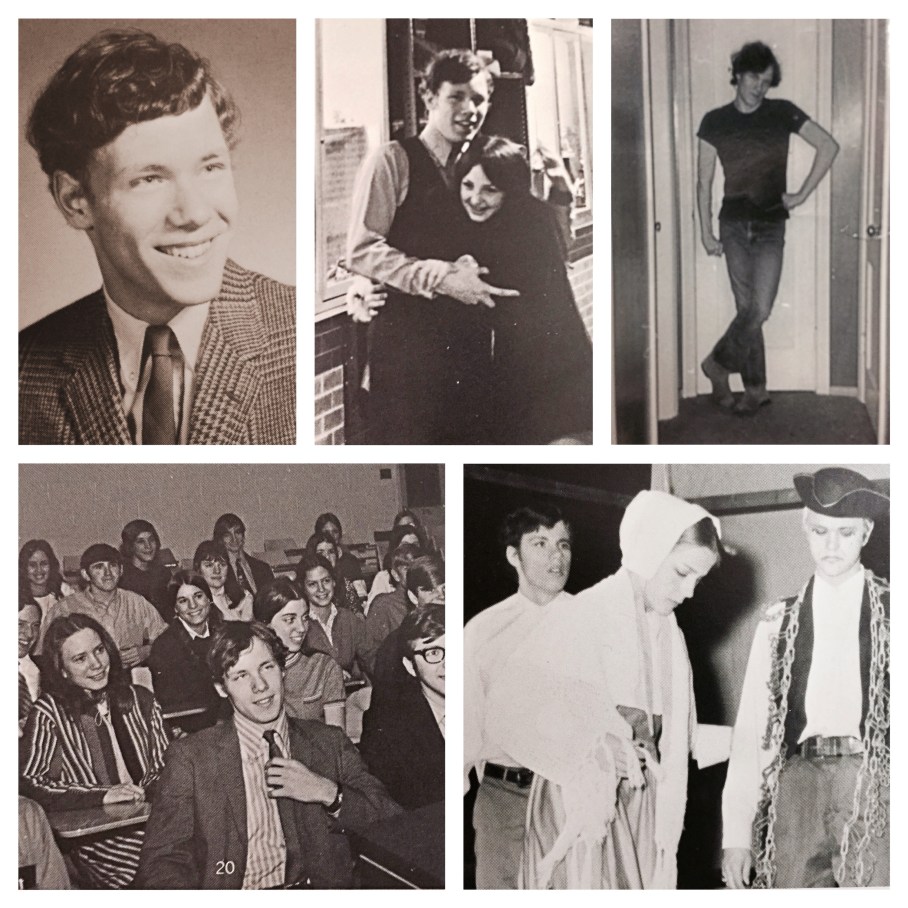
When I was a young boy Mom used to drag me to play rehearsals. I’d sit around and watch the initial blocking all the way to final dress rehearsal. When I was a sophomore in high school, teachers were begging for students to audition for a one-act play.  Our class was putting on The Lottery, by Shirley  Jackson. I signed up and got the lead, Mr. Summers, the man who conducts the lottery. The play is about a town that picks someone’s name out of a hat every year and kills them to ritually save the crops. Not only did it do well, I received the award for best actor. After that, I really got the acting bug and was in a number of plays and musicals: Crawling Arnold,  Once Upon a Mattress, Guys and Dolls, The Crucible, and Li’l Abner, most under the direction of Mr. Robert Sine. During one rehearsal Mr. Sine stopped the action by telling me I used my hands too much. “Make the point, and put them away,” he’d say. For some reason I kept overusing them. Frustrated, he stopped the rehearsal again and took off his belt. I thought he was going to beat me with it. Instead, he told me to put my arms at my sides and he wrapped his belt around me. “Now,” he said. “Let’s do that scene again.” Embarrassed, I made sure I never overused my hands on stage again. In The Crucible, I played the male lead John Proctor. It was a very trying role that required me to be on stage the entire play. Even though the rest of the cast had understudies, I did not have one. So it was up to me to deliver. My reward at the end of the show was not only hugging the girl who would end up being my life-long soul mate, but getting an offer to apply for the Yale School of Drama from their Dean. I’ve heard it said that the most entertaining shows are ones that people can relate to from an emotional standpoint. A good show is one that reveals how people face adversity. And in the process of overcoming the obstacles, become stronger and wiser because of it. From Shakespearian plays to situation comedies, it is a universal topic that grabs our attention. We have a hard-wired part of our brain that looks for problems to solve, and allows us to grow from the experience — making us less likely to make stupid mistakes and more likely to live another day. I believe this is the reason why I’m here: To overcome a set of challenges, to make mistakes, but to learn from them, and to become a better person in the end. It is the essence of drama, and the essence of life.  Shakespeare is right when he wrote, “All the worlds is a stage, and all the men and women merely players: they have their exits and their entrances; and one man in his time plays many parts …”

Marc, the ?


So where does that leave me? I didn’t have the tough demeanor Kent had, and I couldn’t play in Brad’s arena either. Lisa was too young to bond with. I liked to draw and create things. I enjoyed photography. I liked television. I liked music. I started to enjoy reading and writing. I found myself evolving into my own person, because I clearly couldn’t compare myself to my sibs. It started with music. I sang in the boy’s choir and mixed chorus making it all the way to All-State Chorus. I played drums in the Jazz Band and trumpet in the School Band. I played in a rock and roll band that eventually got some cred. I wrote for the school newspaper. I took art classes as well as mechanical and architectural drawing to learn how to create something from scratch. I signed up to be in plays and musicals and even played piano and sang a solo for the entire school on Senior Night. I started to let my personality come out which led to early relationships with girls. This helped my confidence, and by the time I graduated high school, I didn’t need to “find myself.” I pretty much knew who I was, what I wanted to do, and who I wanted to do it with. 

Brad the Casanova

Even though he was only a year and a half older than me. Brad was light years different from me. He was socially confident and an athletic daredevil. Add to that his ability to balance on a number of platforms: skateboards, surfboards, and bicycles made him a popular person in and out of school. He also had a creative and quirky side which added to his charm and personality. 

The girls wanted to be with him, and the boys wanted to be him. Brad was a lover and not a fighter like Kent. He had good musical taste too and turned me on to many artists I would have never heard otherwise. He dated at an early age with the popular girls at school, many times walking down the school hallway with one under each arm. Brad was pretty bright too and seemed to get better grades than the rest of us. He usually went out with girls in my grade. He was a hard guy to hate, but an easy guy to be jealous of, particularly when you have no confidence socially and no athletic ability whatsoever. Brad and Kent both had wanderlust and spent time after high school discovering themselves as well as the far corners of the country and the world. Fast forward forty years, and Brad is married to Roberta, the same girl for over three decades, has a grown daughter Madeline, and over that time has lived in the same house in New Jersey. He has hung up his surfboard, but regularly enjoys competitive tennis and ping-pong with friends.

Org the Hood

Now as older teenagers, my brothers were developing into grown men. Kent, the oldest, made his mark by developing a reputation as a hood in school. They called him “Org.” I don’t exactly know where that came from. He was tall with an athletic build, and had a cool aura about him. Kent didn’t seem to care what you thought of him, and would just as soon punch you in the face than look at you. I don’t recall him being particularly tough at home, because Dad pretty much held the reins there. Kent was suspended several time for blowing up toilets and smoking in the boy’s room. His friend Rick Streed would dare Kent to do stupid stuff. Kent was into cigarettes, booze, and a variety of drugs. He also loved hot cars and music. As his reputation grew, so did his Afro. 

 I remember one of his friend’s brothers, Mark Syers, who was also a close friend of Brad’s, publicly razzed Kent in the high school hallways. Kent took him outside and beat him up in front of the whole school. In another example, Kent was hosting a beer party at our house. It was packed. Dad had asked Kent not to touch his Budweiser beer. One guy, Dennis Coleman, took one of my Dad’s beers from the refrigerator and started drinking it. Kent was furious! Another guy, Steve Childs, ran up to Kent and pleaded with him to allow him to beat Dennis up. Kent nodded okay, as the kid was significantly smaller that him. So right outside my house Steve beat up Dennis and sent him home with his tail between his legs. When my father got home  he found a MIller High Life can in place of the Budweiser can in his six-pack. No biggy. Fast forward 40 years … Rick, Mark, and Steve have all passed away, while Kent, who wouldn’t hurt a fly nowadays, enjoys peaceful days in California. He has a grown son Robert Orton III. How things change after high school.