Things I Learned from 1962-1966

  • Don’t belittle anyone in public either by giving them the finger or verbally putting them down. It might make you feel good for a minute, but there’s nothing to be gained from it in the long run.
  • Enjoy the beach but wear suntan lotion.
  • Cars may be cool, but girls are hot.
  • Stand up for yourself.
  • Most of the time you’re worrying for nothing.
  • Make sure there’s always music in your life.
  • Sometimes the truth hurts.
  • Just because you like to do something doesn’t mean you’re good at it.
  • Be aware that some of the things you are doing today are “once in a lifetime” events. Appreciate them and remember them.
  • Take some time to improve your appearance.
  • Know the rules about being in social situations – have some class about yourself.
  • It is more than a coincidence when you meet and build a relationship with someone. You learn from one another – either what TO DO, or what NOT TO DO.
  • Even the most powerful, righteous, and charismatic people in the world can be killed.
  • Sometimes life isn’t fair.

Gator Gal

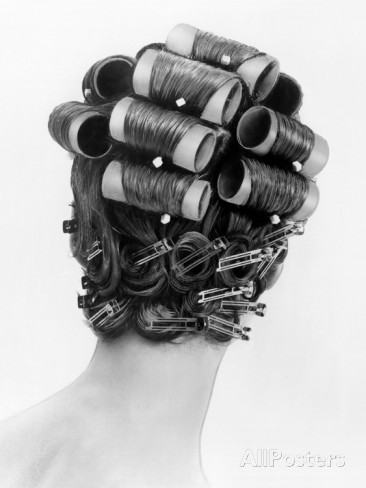
When I was in junior high, the band and I would often take the bus to Trenton and Ewing, mostly to visit Chopin Music and drool over the amplifiers, guitars, drum sets, and keyboards. One day we were walking along Olden Avenue and I saw a VW convertible with a teenage girl wearing curlers and driven by her boyfriend slowly drive by. I said out loud to my friends, “Look at her. She looks like a crocodile.” The car screeched to a halt, backed up, and I noticed the girl crying. The big boyfriend stepped out of the car. He said to me, “What did you say?” I said I didn’t mean anything by it,” He paused for a second, looked at his girlfriend, pointed at me, and got in his car and sped away. My heart still beats hard today just thinking about it. My friends said in a nice way, that it was a stupid thing for me to say. But they also said if he was coming after me, they would’ve most likely helped me beat him up, or at least provide emotional support while I was getting my clock cleaned. What made me do it? I blame it on a combination of ignorance and insensitivity, both characteristics common in adolescent boys and, as I learned later,  political pundits.

The Jersey Shore

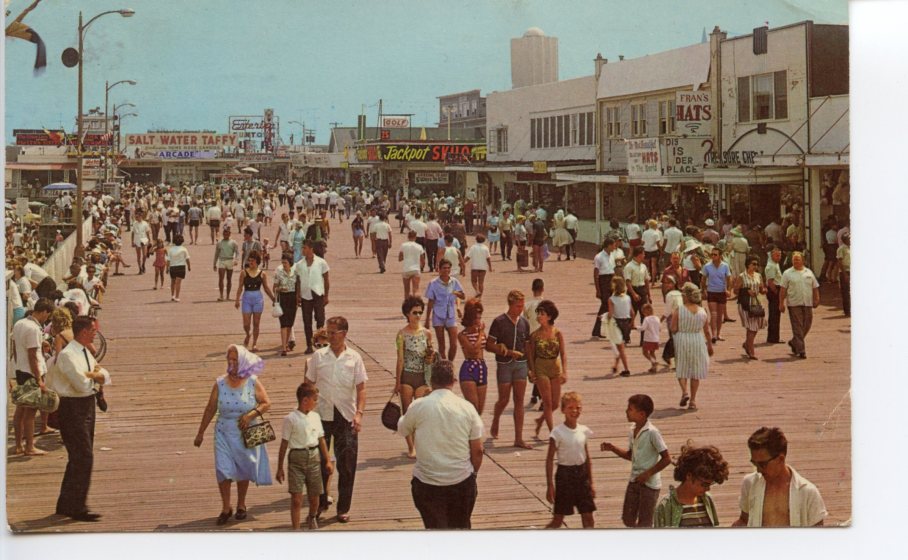
Our first time “down the shore” was a different experience for us. We were all used to the quiet and boredom of Cape Cod. At the Jersey Shore it was fun and there were lots of things to do besides baking out in the sun. There was a real wooden boardwalk with game parlors, food smells, and gift shops. You could win new music albums, towels, and cool T-shirts by only betting a quarter on a number. It was gambling, but somehow it was legal. There were great rides, particularly at the Steele Pier. The Wild Mouse was a scary roller coaster, The Zipper, ferris wheels, and my favorite, bumper cars. Bumper cars are still at the shore now, but in the 1960’s there were no safety harnesses or guidelines. It was a every man for himself and take no prisoners mindset. If your car stalled, or you were jammed in a corner, good luck. The most you could do is pray for the ride to time out and not die in the process of being ruthlessly rammed by every enraged teen and girl scout. It was different story when you were running fast and spied a timid driver, or even better, a stalled brother, then it was time to unleash hell and let the Devil sort out the pieces.

NEXT UP – Gator Gal

World’s Fair

In the mid sixties New York City was really changing. At the time, entire neighborhoods of brownstones were being razed. Philharmonic Hall was recently built, as was Shea Stadium and The Guggenheim Museum. But the big draw was the 1964-65 World’s Fair, which took place in Flushing, Queens. We visited there twice. I particularly liked the Ford and General Motors exhibits. I recall getting a little glow-in-the-dark badge at the Ford exhibit that had my state on it and having a ride in a new Ford Galaxy convertible. I recall the Unisphere (which is still there today), GE, Travelers Insurance, and for the first time hearing, “It a Small World” at the Coca Cola exhibit.  Everybody I knew went there, and had a story to tell about their experiences. From the larger companies there was a lot of effort letting visitors in on what the world of tomorrow will bring. We were exposed to futuristic cities with flying cars, moving sidewalks, and vacations on the moon. We even had an opportunity to look into how an average family would live in 2014, with pre-prepared food, robotic servants, and 3D color TV. One thing I learned is that it IS a small world. The country exhibits really exposed me for the first time to different cultures, different food, and a variety of ethnic races and religions. The state exhibits really allowed me to travel around the USA without leaving the big apple. I vividly recall seeing the Hall of Presidents at the Illinois Pavilion. These animatronic leaders talked about the history of the country and our human rights using advanced technology. This ended up being more of a predictor of the direction we’re going than any futuristic display. In fact, the Hall of Presidents is still being featured, along with It’s a Small World, at Disneyland and Disney World. After the success of this World’s Fair, I know there were others that followed, Seattle and Knoxville to name a few, but the greatest in my mind was New York.

NEXT UP – The Jersey Shore

“Picket’s” charge

In the steamy summer of 1965 the Hopewell Valley School District was being populated by a flood of baby boomers. Because there was a contingent in the township that did not want to invest in a new building, the school board decided to start staggered sessions for grades 7 and 8 so that all the students could be transported and classrooms and lunchrooms would not be overfilled. Half of the junior high school class attended school from 7:00 a.m. to 1:00 p.m., while the other half went from 11:00 a.m. to 5:00 p.m. Mom, reading this in The Trenton Times decided it was time to kick up some dust. At this time, protests were frequently in the news, particularly over civil rights issues. So Mom mobilized over a dozen of our young friends, bought some poster paper, and created signs that stated that staggered sessions were unfair, and what we needed  was a new school. At 9:00 a.m. the next morning she sent us youngsters out to the Tollgate Junior High School on Main Street to walk around in a circle holding the signs and called The Trenton Times to let them know it was happening. Mom wanted to make sure there were no adults there, so it appeared that it was the students that staged it. Before the demonstration, we prepared ourselves for the tear gas and water cannons that the crack Pennington Police Department, under the direction of Chief Delmonico, would surely use on us. There were even a few kids who were too afraid to take part. But the event took place without a hitch. Chief Delmonico did show up, only to tell us to make sure we stay out of the street. A reporter from the paper came and asked Kent and some of the older kids a few questions about what this was all about. People driving by the school slowed down and some even honked at us, or for us, we couldn’t tell. We were probably out there for a total of three hours, and then we came back to our house for some milk and cinnamon graham crackers. Not only was it printed in the newspaper the next day with a photograph of us with the signs, there was eventually a decision to build a new junior high school, Timberlane School, as soon as it could be funded. In the newspaper article the astute reporter wrote that he thought adults were behind the protest because all the signs were spelled correctly. Of all the kids who participated, only the youngest demonstrators got the benefit of the new school. I was in Timberlane’s first 8th grade graduating class in 1967 and I learned from Mom a little bit about public relations, and how the simple act of getting off the couch and taking part in something can make you feel that you can make a difference in this world, and inspire others to do the same.

NEXT UP – The World’s Fair

Music Man

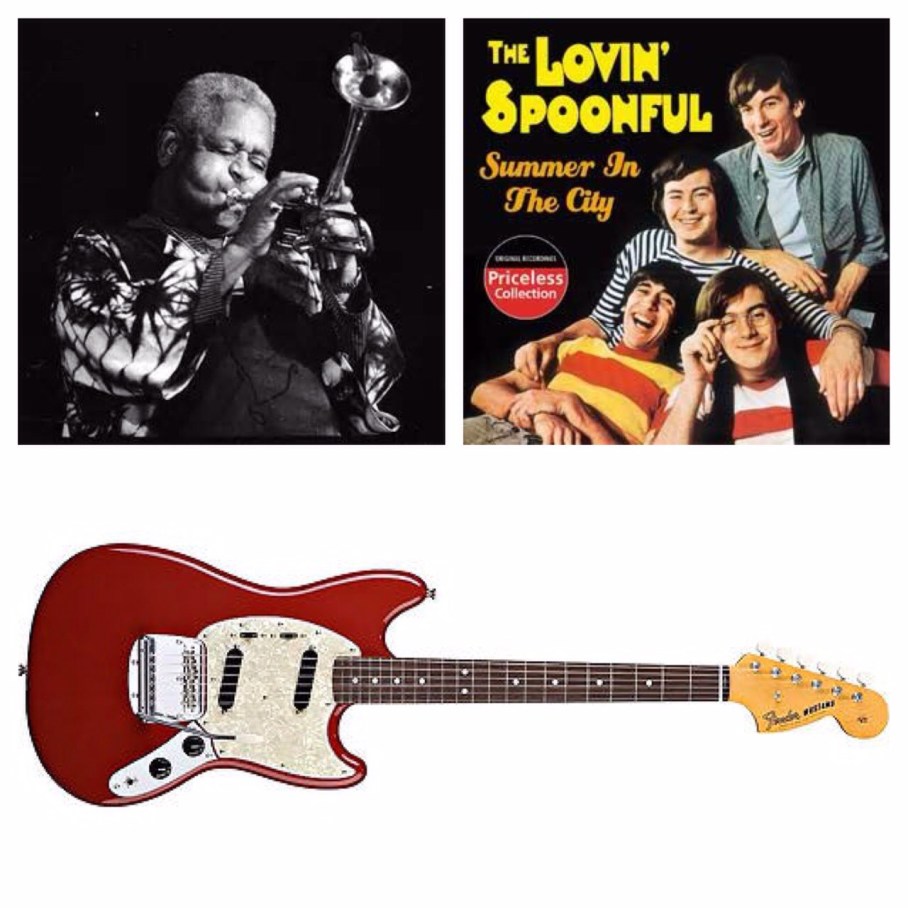
In junior high school I took up the trumpet. I don’t exactly know why except that I really liked Al Hirt, Dizzy Gillespie, Louis Armstrong, and Herb Alpert. Art classes, including those focused on music and dance, were offered at the high school over the summer. So Mom, wanting to get us up and out of the house and feel good about it, signed the three boys up every year for something artsy. So for three years I learned more trumpet and also learned music theory and even took jazz dance. Brother Brad took drums and music theory as well. One summer I even volunteered to be in the local Drum and Bugle Corp as a bugler. I didn’t know the first thing about the one-valve horn, but I had an opportunity to march in several parades in uniform, and marvel about how cool the drummers were. One year, my parents bought Brad a drum set. It was a Japanese-made US Mercury set, with laminated brown wood shells, ride cymbal, and a high hat. The set included a 22″ bass drum, snare, a mounted tom-tom, and a floor tom. I would watch and listen to him play it in his room and marvel at how cool it was. He would play along with his 45 rpm records. Brad could do everything! He could play sports a lot better than me, he got the good-looking girls, he was confident around everybody. But maybe this is something I could do too. So he showed me a few things and allowed me to play them, which I did often. Around the same time I saw my first rock concert. The Lovin’ Spoonful were playing at the Music Circus in Lambertville. In 1967 I went with my new friend Johnny Kurtz and his younger sister and friends. I think the tickets were $4.00. The girls loved them, particularly when they played their current hit, Summer in the City. This looked like this could be a way to get the attention of girls — to play music. Johnny and I talked about playing in a rock band someday. At school we met Dave Conard who had a cool haircut and liked to sing and I mentioned my other friend Mark Ward who could play keyboards. At that point, things moved fast. Johnny got guitar lessons and eventually got himself a bass guitar and a Supra amplifier. Mark got a Farfisa-style electronic organ and Fender Champ amplifier. Dave bought a microphone from Lafayette Electronics. Our first practice was at Mark’s house. I brought Brad’s drum set, and I think we learned how to play Louis, Louis. During this first practice, Mark mentioned that we should get a guitar player and we didn’t know any. He said there was a kid he knew from church named Carl Sturken, who was really good. Carl had his own Fender Mustang guitar and Princeton Reverb amp, but he was two years younger than us, and lived and went to private school in Princeton. The next week we tried him out, which was a revelation because he was much better than all of us. As the Split Ends, our earliest tunes were Wild Thing, Just Like Me, and House of the Rising Sun. At the eighth grade Spring dance, Dave mentioned to the rock band on the stage that we’d like to play a song. To our immediate surprise and dread, they said “yes.” We played Just Like Me. I imagined many of my classmates saw all of us in a different light that night. Our first paying gig was to play for a pool party at the O’Donnell’s house across the street from mine. We played four songs twice, and Dad paid us twenty dollars. As of 2014, two out of the five of us are still in the music business.
Friends for Life

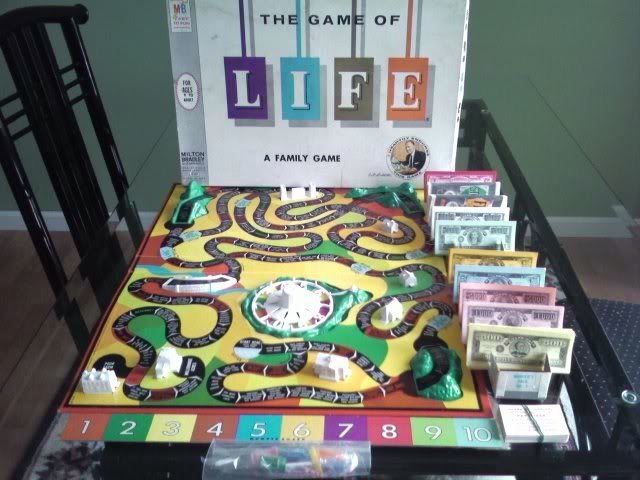
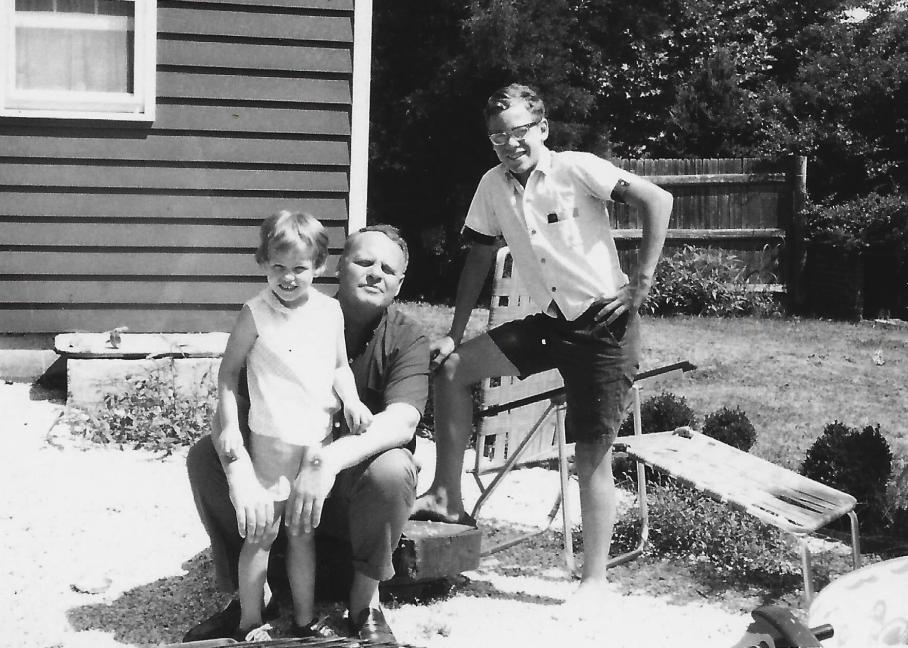
In 7th grade, class teams were the school district’s first public attempt to separate the smart from the not so smart. They were F1, F2, A3, L1, L2, L3, R1 and R2. The highest level was F1, which meant you’d be taking French. The lowest was R2. Those students spent most of their time honing their reading skills. I was in L1, which was the higher end of the mediocre students, which was pretty much where I should have been placed. There I met a boy who I befriended and ended up getting along with extremely well. His name was Johnny Kurtz. He couldn’t have been more different than what I was used to. He was Catholic. His father owned and ran his own chainsaw sales and repair business right behind his house in the middle of the country. The Kurtz’s owned over 300 acres. Johnny had asthma, so he needed an air conditioner in his bedroom. This was a big deal back then. Few people had air conditioners in their houses in 1965, let alone one in their bedroom. When I think about why we got along so well was that we both felt disconnected from the teen world we just entered. We also shared the love of cars, music, and girls. He was funny and had a great self-deprecating sense of humor. Normally a quiet guy on the surface, he would come out with some of the funniest things I ever heard. He also had a quiet sense of decency, honesty, and generosity, as well as an admirable work ethic that I respected. His family was friendly, grounded, and really salt of the earth types. Not something I was used to with a preppy father, living in a suburb, and going to a liberal church in snobby Princeton. At Johnny’s house we must have played the Game of Life a thousand times. We imagined what our lives would actually be like in the future while listening to The Rolling Stones or The Animals on his hi-fi. We would walk through his vast fields and pick off dozens of ticks afterwards. That’s when I realized for the first time that am most happy when I’m just with a person or two. I’m not much of a big party animal type. My friendship with Kurtz grew as we both aged into adulthood. When he stayed at my house we would walk through the streets of Pennington until three in the morning, talking about girls, teachers, and our arch enemies, The Fish. The Fish were a gang of guys who lived in a neighborhood about a mile from my house. They were a year younger than us. Unlike us, they smoked and drank, and for some reason really hated our guts. Despite the amount of time we spent talking about them, fantasizing what we would do to them if they ever bothered us, it never amounted to anything. Kind of like the girls we never asked out, and the cars we never drove. Such is the Game of Life, I guess.

Girls, Girls, Girls

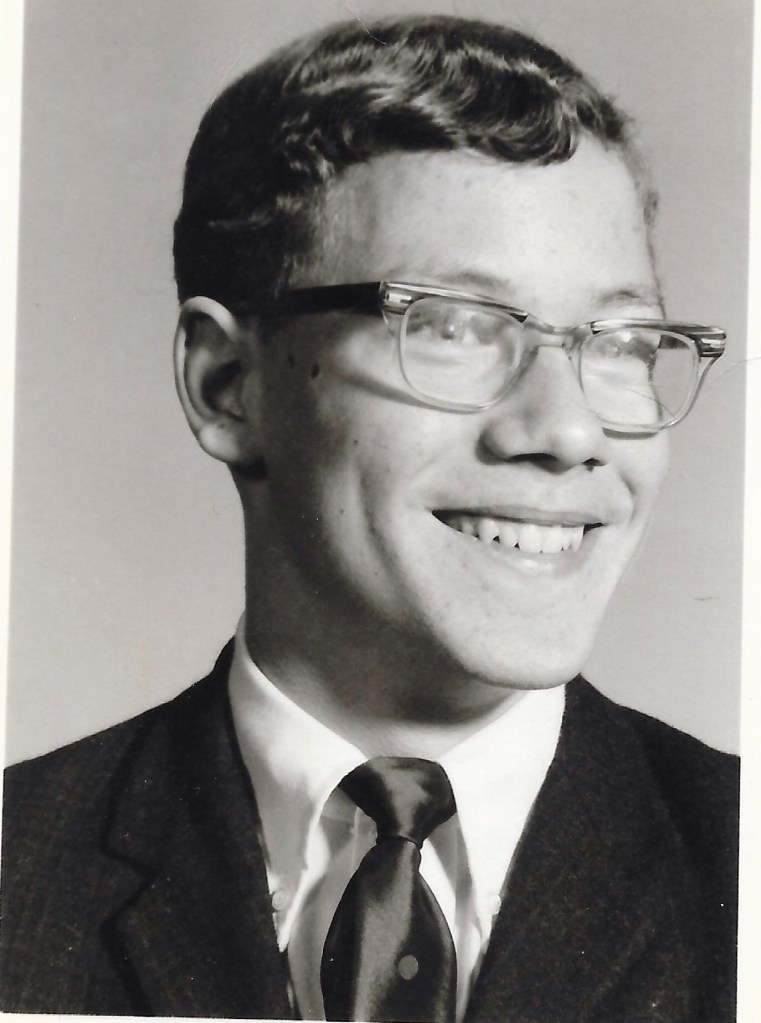
When I was eight, Mom asked all three of her boys to draw a picture of the girl we would marry one day. I gladly drew a short brunette with long hair and green eyes. I’ve always thought that I’d be married someday. My very first friend who was a girl was Jan Easton. I used to go over to her house across the street and play board games – her favorite was Park and Shop, and play with matchbox cars. But when I returned home I was teased by my brothers, who called Jan my “girlfriend.” Eventually I stopped seeing her. The teasing was too much to bear. My first fascination with girls was in the 5th grade. I had a dream about a girl, in fact she looked very much like the girl I ended up marrying. There was nothing sexual about the dream, only that I truly loved being around her and was mesmerized by her feminine beauty, smile, skin, and eyes. After that I was hooked! Of course there were boys my age that were ahead of the game and even had girlfriends then, I imagined because they were more confident in themselves or better looking. As I entered junior high school though, my confidence didn’t grow at all. I remember one girl asked me in front of the whole class, “Why is your brother so cute, and you’re so ugly?” Of course I was embarrassed and stunned, but my old friend Jan Easton stood up for me and told her to shut up and to look in the mirror herself. I have to admit though, when I look at pictures of myself then – acne, unmanaged greasy hair, wearing taped together bifocals – I now see what they saw. Not a pretty picture. Still, just being around a girl made my heart race. Mark Ward and I agreed when we talked at sleep-overs that we liked girls, ALL GIRLS. I had an opportunity to play “Spin-the-Bottle” for the first time in 7th grade, and got to kiss a lot of girls for the first time. That was awesome! I remember praying that the bottle would point to the one girl I really wanted to impress with my kissing skills. Once in a while it worked. The girls always seem to be more than happy to kiss whomever the bottle pointed to. Some of them kissed softly and sensually, others kissed a long time with a lot of lip pressure. I do regret that I never kissed Jan Easton. After all, that’s the least I could do for her standing up for me during the lowest point of my adolescent life.

What the Doctor Ordered

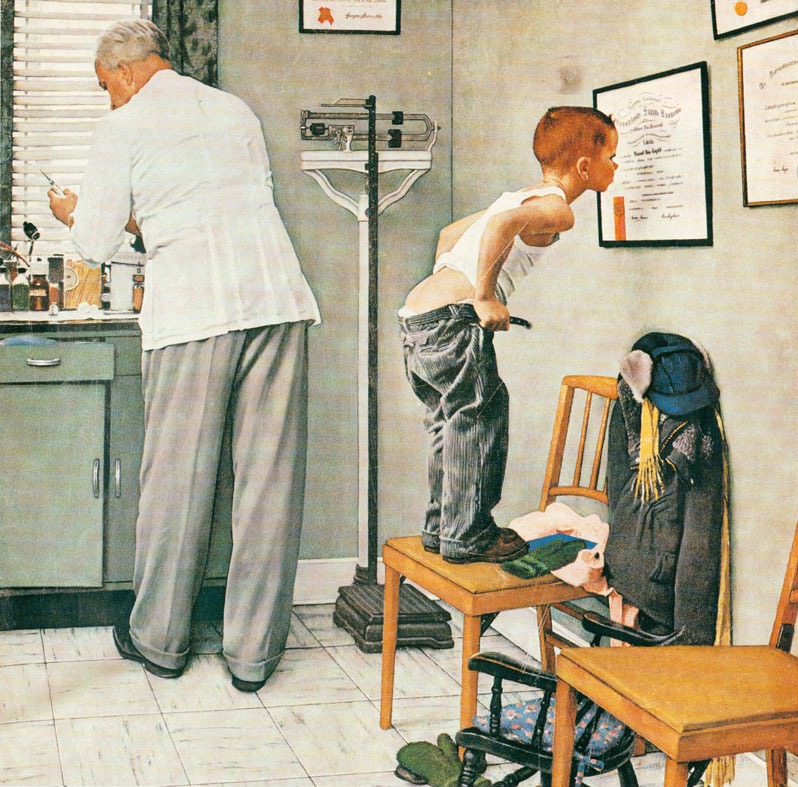
At the age when most kids only saw the inside of a doctor’s office when they broke a bone, I had to go to the doctor for rather unusual reasons. I had a lump on my left knee that I tried to ignore until Mom called attention to it while I was wearing shorts one day. She sent me to Dr. Abbey, our family doctor on Main Street. He said he’d have to do surgery right there in his office to remove the gumball sized lump and have it tested for cancer. Since his nurse/wife was unavailable, Mom had to assist in the procedure which she found very interesting. “Look Marc. Look at the cyst Dr. Abbey removed from your leg. Isn’t it interesting?” Thankfully it wasn’t cancerous. In another doctor’s appointment to try to correct my sight, my eye doctor prescribed bifocals with prismatic lenses. Imagine a 12 year-old with thick bifocals? Embarrasssing! In the summer of 1965, when I was about to enter Junior High School as a 7th grader, I was really stressed out about my body. After all, I couldn’t play sports like everyone else and my eyesight was weird. I had cysts. I was always tripping over things, I stuttered, and I felt my body changing — into what, I don’t know. I knew I would be made to shower with others boys my age, and with everything else odd about me, I wasn’t sure I was anatomically normal. To make matters worse, the school district required all students to have a physical before entering middle school. My greatest fear was going to the doctors and having him find something wrong with me that would make me stand out out or otherwise embarrass me. Nothing made me happier than to find out after the physical I was normal and everything was okay. When I finally went to the showers I was gratified again to see that boys my age were at various stages of development — some had hair as thick as a rug on their bodies, which early on was embarrassing to them, but most boys were relatively hair-free like me. I learned after a while that going to the doctors was not a big deal. Sometimes they actually help me rather than contribute to my continuing lack of coolness.

Cars, Cars, Cars

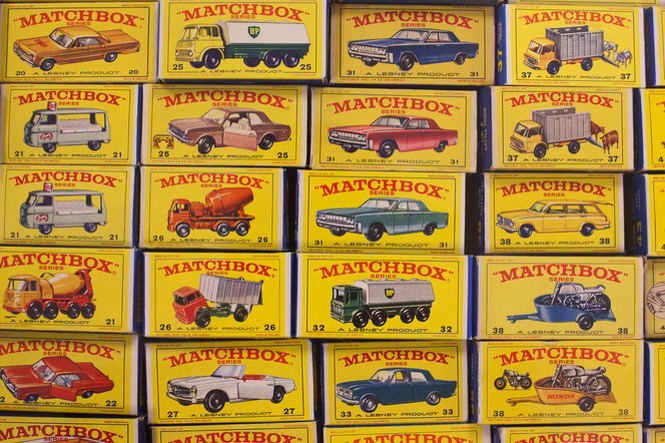
Cars continued to be a major source of fascination for me. I spent hours drawing pictures of cars, reading Motor Trend and Road & Track. I built model cars. I particularly liked to build Fords and make them look fast. I always bought AMT brand model kits from the small Twin Pines store on Main Street, making sure I has enough glue for the job. As I recall the kits were $1.49. I liked to put on the decals and, when I had an extra 50 cents, would even paint the car body. In late September or early October, I would often ride my bike to the two car dealerships in town, Pennington Ford and Blackwell Chevrolet, when the new car models would arrive. One time Dad took us boys to an open house at the Fisher Body Assembly Plant in nearby Ewing. We toured some of the inner workings of an automobile factory and saw all of the newest General Motors cars in person — and we could actually sit in them. I collected as many of the buyer’s catalogs as I could take home. My favorite car that day was the Buick Electra 225. What an enormous boat of a car! Once I got home I poured over the pamphlets and made believe I had all the money in the world. What car would I buy with what accessories? I remember thinking that if I ever went to prison, as long as I had car magazines, I’d be all right. That was obviously before I discovered girls. My auto passion also extended into collecting Matchbox Series toy cars. Made in England, these small metal models cost about 50 cents each and actually came in something that looked like a matchbox. It was my first introduction to foreign car brands like Jaguar, Mercedes Benz, and Rolls Royce and I collected hundreds of them. When I was in sixth grade, Dad said I was too old to be playing with toy cars, so I took them across the street to the O’Donnell’s and gave them to their youngest boy to play with. I never saw them again. I wasn’t too broken up about it though, because there were other distractions of the female persuasion that started to attract my attention. Alas, Dad was right.