British Invasion

I mentioned on an earlier blog that Mark Ward and I used to sing songs from Oliver together. At the same time, British rock bands were all the rage. Herman’s Hermits, Chad and Jeremy, The Hollies, and of course The Rolling Stones and The Beatles music were being played on every 50,000 watt am station in the New York metro area. I used to listen to Cousin Brucie (Bruce Morrow) on WABC. So needless to say if a British accent was heard, it garnered attention. One summer while in Point Pleasant at the Jersey Shore, Mark and I decided to put on English accents to see what would happen while visiting the boardwalk. We had no idea how good our accents were, but apparently we fooled a lot of people. We talked to each other loudly in these accents so others could hear us. Shopkeepers gave us free stuff, people were uncharacteristically polite to us and wanted to know as much as they could about us, but we stayed in character. We made up a story that we were on holiday from London, and really liked being in America. Since then, every once in a while, I will have a waitress with an English accent wait on me, only to find out she is really a starving American actress who discovered she gets better tips when she puts on a British accent. The invasion continues … and with it, the British accent dividend.
November 22, 1963

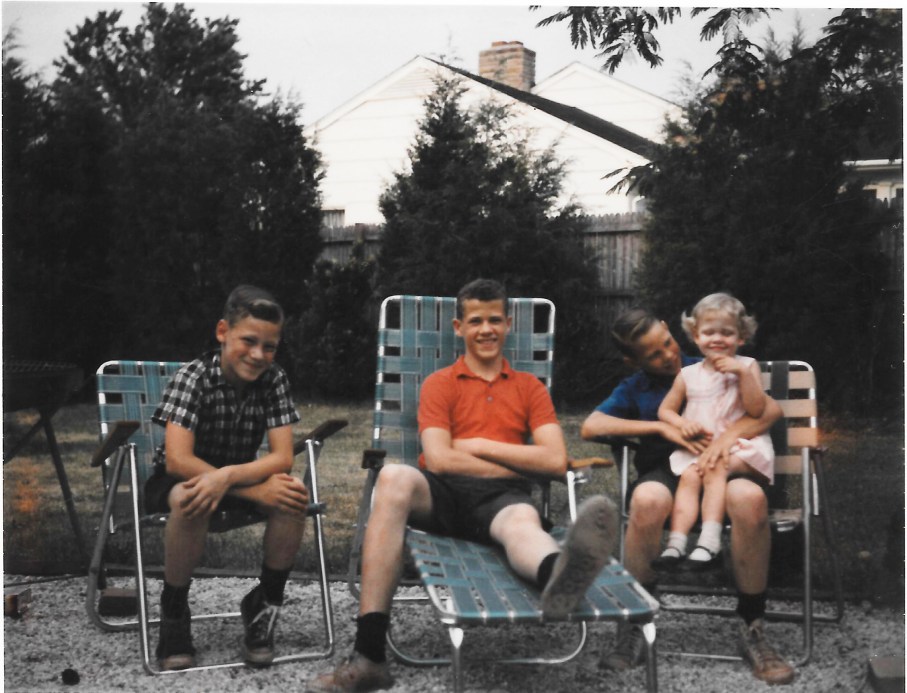
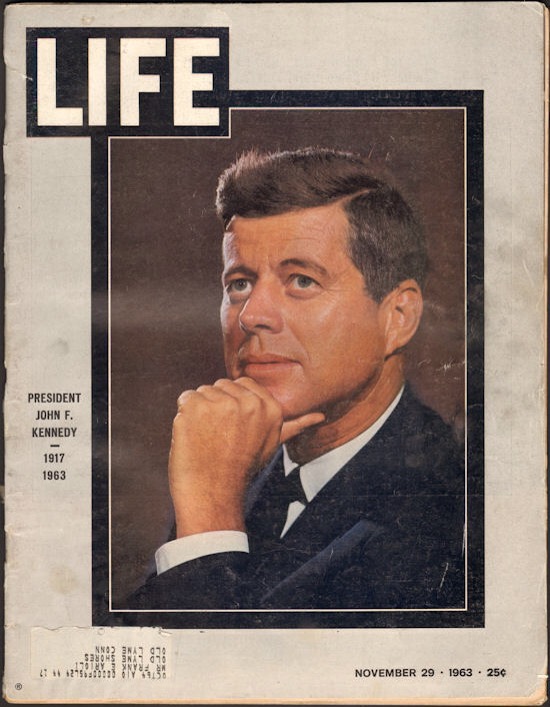
It was a day that started like any normal day for me. Dad was out of town in Texas attending a conference and I was in the second floor classroom with the rest of Mrs. Seavers’ fifth grade class. Afternoon recess was over and we just returned to the room. Our teacher was very serious. She spoke up and told us that President Kennedy had been shot and that’s all she knew at the time. After a few minutes she came back into the class crying. She managed to say that he had died. That someone had shot him. She didn’t have any other information. The rest of the day we didn’t have lessons, we just waited it out. When they let us out early and I got home, Mom was doing something she rarely did, she was glued to the television set. Brad and Kent were there too, watching something that was incomprehensible. My personal tie to Kennedy at school was, because I had just moved from Massachusetts, I could do a pretty good New England accent, like Kennedy’s. The number one album at the time was a comedy skit record called The First Family by Vaughn Meador. He and his troupe mimicked the entire Kennedy clan, from Jack to Jackie. It was really funny. So my classmates sometimes called me “Kennedy,” and then I would do the accent. When he died some students actually went up to me that day and said how sorry they were about the whole thing, like he was good friend of mine. I found out later that Dad was in Dallas that day and was supposed to see JFK speak at the Trade Mart, but decided to fly home early instead. His flight was delayed at Love Field while JFK landed. They finally took off after the motorcade went on its way. By the time he landed in Newark, the pilot informed them of the assassination. The Saturday after he died, Life Magazine was delivered to my house so I brought it to school. Mrs. Seavers had never seen the cover so she asked is she could use it to make a bulletin board memorializing the man. It was the only time Life was printed with a black field instead of a red. That Sunday when Mom and the rest of us kids returned home from church, Dad shouted to us “They shot Oswald. I can’t believe someone shot Oswald, just now on live TV.” It seemed that America had gone off the rails.

The Wards

I first met Mark Ward in Sunday School class at the Witherspoon Elementary School in Princeton in 4th grade. I was stunned to see him again in my 5th grade class as the new kid, as his family had moved from Princeton to Pennington. We became fast friends and were inseparable for the next four years. The oldest of the kids, Mark had a large family, three brothers and a sister, and lived in a gigantic Victorian manor house about a half mile from my home. His father was a psychiatrist. Mark was a cool guy and he was really smart. Like all preteens though, personal hygiene was not our strong suit. Yes, we weren’t the most popular boys in class, but we both decided we liked girls about the same time, so we could talk about that topic for hours. He loved music too and played music and sang. It was at his family’s summer house in Point Pleasant Beach, when I first heard the Sgt. Pepper’s LP. I remember Mark being in the cast of the musical “Oliver” where he played one of the orphans. We would sing the songs together while climbing trees in his massive front yard. Dr. Ward owned a white MG-B convertible sports car. I saw their lives untangle in a very horrific way. As I recall, Mark’s father was doing some experimental work with Lysergic Acid – or LSD, when his wife volunteered to be part of the test group. Mrs. Ward had a “bad trip” and had to be hospitalized for about a month. We watched Mark as a favor during that time. Soon after she was released, she had a very public flashback while shopping in Princeton. Very soon after that she and her husband had a terrible car wreck with that sports car and both nearly died. I still remember seeing the scars on her young face as she recuperated. Later on, Mark transferred from public school to private school and I saw a lot less of him. He eventually graduated from college, became a newspaper reporter and writer, and is now a Unitarian minister. It’s amazing how as kids we have no clue as to what our lives will eventually be. We just dream and get excited about the possibilities, but in time understand that “life happens.” And we become open to the whims of the universe and accept the idea that a higher power has a plan for all of us.

1964 1/2 Mustang

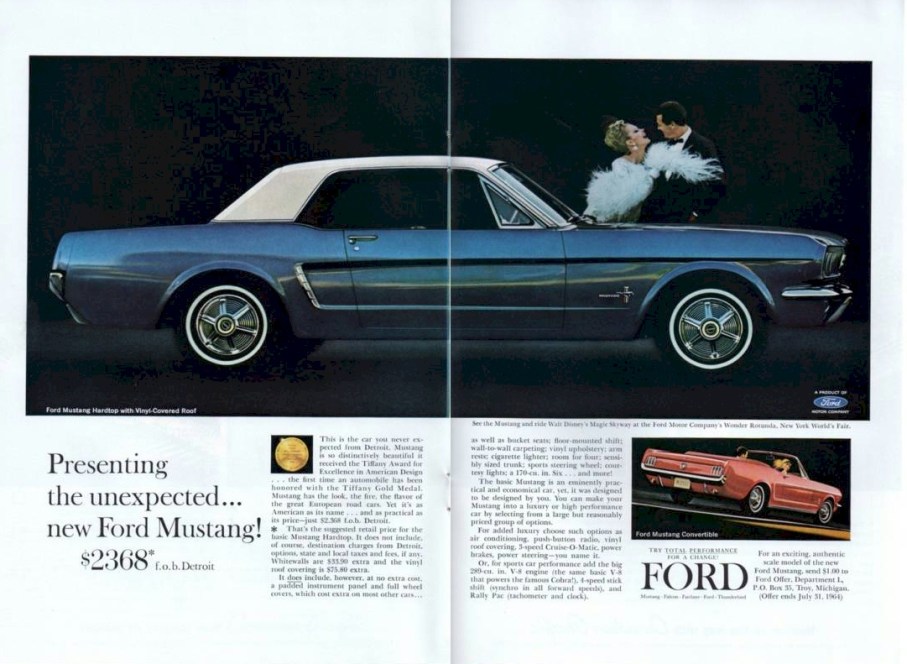
Another friend of Dad’s worked for Ford Motor Company. I really liked this guy. He came by one day with a brand new 1964 1/2 tangerine red Mustang convertible and asked if we wanted a ride. Being a car nut, this was a dream come true. Mustangs at the time were so new that  few people had ever seen one before. Even the ads on TV didn’t actually show the cars – it just hinted that they were coming. Ford dealerships hid the cars from view, and when they were finally allowed them to be seen, the dealers were packed with people wanting to catch a glimpse. When we were riding around Pennington and Princeton, I truly felt like a celebrity. People on the sidewalks would point and stare. Kids fell off their bikes in disbelief. As an added gift, he gave us three boys the first Mustang plastic models I’d ever seen. It was a great day indeed! Two years later, my father surprised me by picking me up at school in a brand new 1966 4-door Lincoln convertible with the suicide doors. Celebrity had come again. I always fanaticized about some day my father working for Ford himself. I think he always liked cool cars. During this time he bought a couple of used cars for Mom. One was a 1958 Chrysler Imperial with dual headlights, enormous torpedo fins, and a hemi engine, and then later bought a 1962 Thunderbird with the bucket seats and a steering wheel that could be moved to the side. Cool cars indeed.

New Shoes to Fill

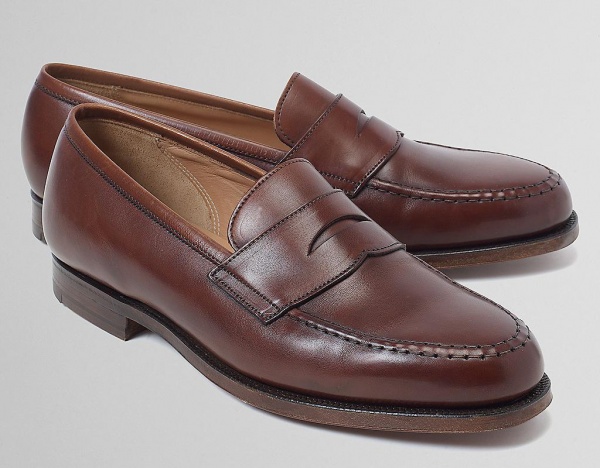
You actually put a penny in the slot at the top front of the shoe in case of emergencies.

You actually put a penny in the slot at the top front of the shoe in case of emergencies.,

On my tenth birthday, Dad had a practice of taking us to work with him. He was a sales manager at the time and worked in Jersey City. On the way there he bought me a pair of brown cordovan leather penny loafers. He prepared me to meet his business colleagues by reminding me how to act around other people. I suppose he was giving me the same information he heard from his schoolmasters at the exclusive private schools he attended. Dad put it in such a way that explained that because we were Ortons, and privileged, there was an expectation we were raised right and therefore we must find those opportunities to demonstrate this to others. Whenever he saw me doing something impolite, he might smack me lightly on the back of my head and say “Marc, come on. Have some class about yourself.” On the way to his job, this is a short list of the many things he reminded me to do to be classy:

  • When you greet people stand up
  • Always give a firm handshake
  • Look people in the eye
  • Say “excuse me” when you walk between people in conversation
  • Call men “mister” and women “misses”
  • Open doors for others, particularly women
  • Always allow women to go through the door first
  • Say “please” and “thank you”
  • Forks go to the left, knives and spoons to the right
  • Button only the top button of the sport jacket
  • Don’t interrupt
  • Hats off in the house and before you eat
  • Always keep clean fingernails
  • Your appearance is important
  • Polish your shoes often

Dad also told me something in private I will never forget. Something he would repeat to me in private until the day he died about sixteen years later. He said, “Marc you are going to be the successful one, believe me, I can tell. I am going to be so proud of you some day.”  I’m not sure if he said that to all us, or whether he really felt I had something to offer the world. I chose to believe the latter, and his support helped motivate me through all kinds of challenges and decisions in my life. The outcome from all of this was I never felt nervous at a posh event, nor have I ever felt anxious when I’ve had to interact with top executives and captains of industry — which I do quite often. Dad gave me the confidence and guidelines to follow to fit in and be classy, and I believe that has served me well.

The Pregnant House Guest

When I was about nine, there was a young woman of about eighteen who stayed with us for about two months. She was the step-daughter of one of Dad’s friends. She had gotten pregnant out of wedlock to a married Marine. We heard that her step-father became enraged when he heard what had happened and tried to beat the baby out of her. So to protect her, my parents made a deal that she live with us until the unwedded mother’s home could take her in. At the time unmarried mothers were shunned by society, and it was a great embarrassment to her family as well. I remember she was very moody, not very sociable, and was always working on her hair and make-up. She had dyed blond hair as I recall. We gave her the large bedroom, so Brad and I had to share a room for a while. It was odd for me having a strange female hanging around the all male-side of the house. Although I didn’t quite understand this alien being, I really felt for her and decided that: Number one – Don’t ever get a girl pregnant out of wedlock (of course I had no clue of the mechanics of it at the time). Number 2 – Sometimes you have to help your friends, even if they’re being asses, for the sake of the innocent people who made the mistake. I often wonder what she’s doing now if she’s still alive. It’s a little scary to think that, as of this writing, her “baby” is probably 51 years old now with children of his or her own.

The Big Apple

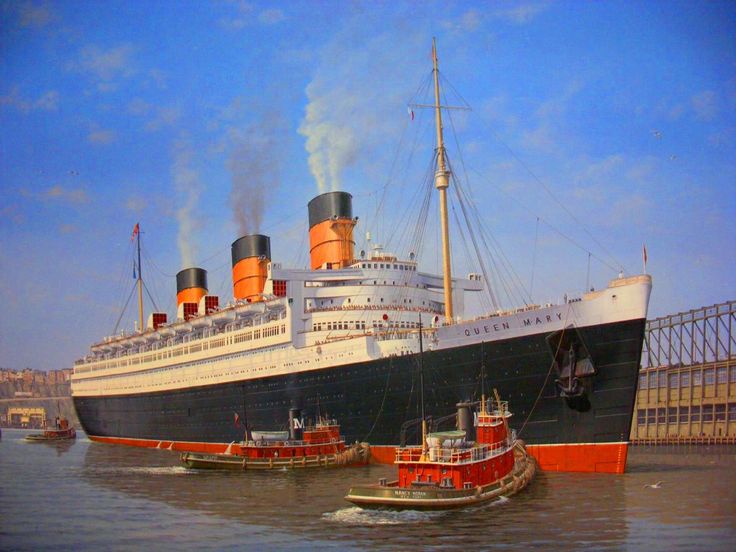
My first “bite” of the Big Apple was pretty sour. One Sunday in the late fall, Uncle Dean, Mom, and all four of her brood tackled the main tourist sites of Manhattan. Only problem was that it was rainy, foggy, and bone-chillingly cold. Everywhere we went was a disappointment. We couldn’t make out the skyline when we looked out from the top of the Empire State Building. Despite the choppy waters on the Circle Line ferry, and the long climb up the spiral stairs to the crown of the Statue of Liberty, we couldn’t see anything but mist and fog. We stood outside the HMS Queen Mary steamship, but couldn’t tour it. Finally we gave up and took a cab back to the Battery where we parked. Unfortunately Uncle Dean couldn’t recall where he parked the car. By that time it was dark and every business was closed, so he put us on the sidewalk under an awning and ran around for a half-hour until he found the car. Lisa was about four years-old. I’ll never forget her wet, little shivering red cheeks. Later on, New York City became the place where Mom arranged to have all of her growing brood together every year. She picks the summer, when it’s warm and almost always sunny.

Washington, DC #1

The first time I went to Washington, D.C. was as a family to visit my mother’s brother, Uncle Dean, who had an apartment there. He was single and worked as a rocket fuel chemist for the government in nearby Arrowhead, Maryland. Uncle Dean owned a color TV. The only thing I wanted to see on the trip was his color television, which I had never seen before. On the way there in that smoke-filled sedan, I fantasized about what it would look like, in particular Disney’s Wonderful World of Color and that wonderful NBC peacock. It did not disappoint me when I got there. He even had a clicker to change the channels remotely. Clickers or remotes in those day were comparatively large mechanical devices. There were only four large buttons: On, Off, Channel Up and Channel Down. There were no volume controls. When you clicked it, it initiated a mechanical servo on the set that sounded like “chunk.” So when you changed channels (there were about five in the D.C. area) it would sound like, “Click, Chunk, Click Chunk,”  Awesome! In my wildest dreams could I ever imagine we’d have one in our own house two years later. Little did I know, but later on in life, I would not only work at the RCA facility in Princeton where color TV was invented, I would partner with one of the key inventors of color TV, John Wentworth, to educate the NBC television network management on how TV is engineered. John would later sell Robin a drum set as a gift for me that would eventually be the first set my three year old son Drew would play. Drew would eventually become a world-class drummer. It’s funny how things are connected sometimes. While we were in the nation’s capital, we visited the Smithsonian Institutions, the Art Museum, and the  National Zoo. I got a stomach flu while I was there and couldn’t eat Chinese food for years.

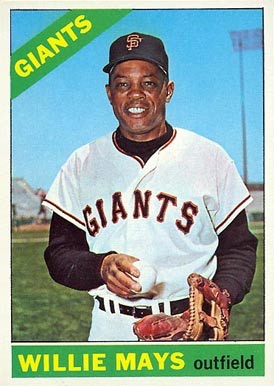
The “Say Hey Kid”

image

I was immensely interested in sports. I read the sports section almost every day in the Trenton Times to see how my favorite team, the San Francisco Giants, played the day before. I scanned the standings and on Sundays would immerse myself in the statistics of all the players: RBIs, ERAs, and batting averages. I don’t know why I rooted for them except that there were a lots of Dodgers and Giants fans in the area since they had all recently moved to the West coast from New York. My favorite Giants players were right fielder Jesus Alou, pitcher Juan Marichel, left fielder Willie McCovey, and of course the amazing center fielder, Wille Mays. I had an opportunity to see them play against the Phillies at Connie Mack Stadium in Philadelphia. In other sports, we used to get season tickets to see Princeton University play football every year. That was always an event, but paled in comparison to the games large colleges played. Despite the fact the Princeton played in the very first college football game (vs. Rutgers), like all Ivy League schools, it did not offer athletic scholarships and therefore didn’t attract many decent athletes. Hopewell Township Schools which I attended did not have a football program, so football was not stressed there at all. As interested as I was in sports, I couldn’t play it. I tried to play touch football with my brothers and the neighbors with mediocre results. I also played Peanut League, which was organized by the YMCA. It was kind of a poor boys little league. We had a basic field: no bleachers, no lights, no snack bar, no PA announcer. The teams were named after colleges that Princeton played: I usually played for Army and Cornell. My depth perception problems really made it next to impossible to play. I do remember Dad coming to a game once. I struck out twice, but then my last time up I somehow hit the ball and was able to get to third base. A triple, and Dad saw the whole thing! I hoped no one shared with him the fact that for almost the entire season, if I didn’t walk, I didn’t get on base.

Playing War

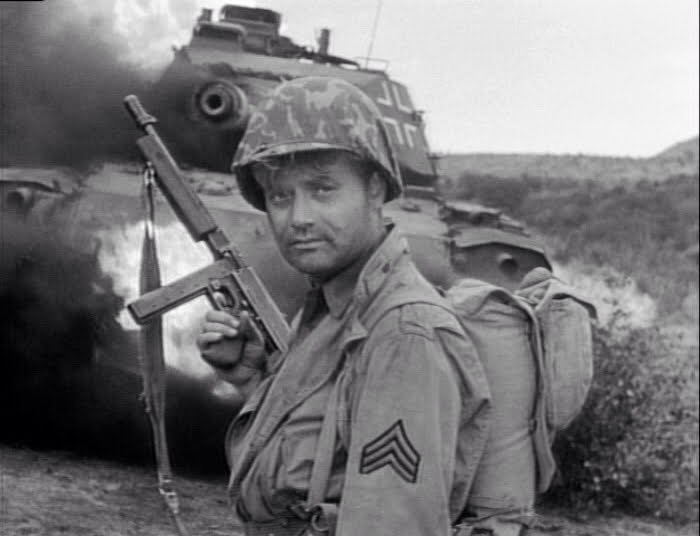
We all watched the television show Combat and watched a cavalcade of patriotic war movies made during World War Two. Fueled by these manly spectacles, we would often get together and fight each other in big battle scenes. The Howes Tree Nursery adjacent to our property was a great place for us to stage the war. If they dug up a tree, the root system left a perfectly-sized foxhole that would allow a number of heroic boys to dodge imaginary bullets. Dirt clumps made great grenades, and even exploded dust when they hit the ground. We recreated the Battle of the Bulge in France, or we were on the way to Berlin to defeat Hitler. We used to set the ground rules before the battle. “You three are the GI’s moving forward towards us from the road over there, the rest of us will be here trying to defend the homeland. Now if you get shot you have to die and stay dead until the battle is over. If you were behind a tree you were safe, but if you were on the run, or were brave enough to charge in the open, you were fair game.” That pretty much meant to had to act out being shot, and falling on the ground cussing out the man who shot you and saying something patriotic like, “Ugh. You miserable Kraut.” The toy manufacturers helped the fantasy game by offering more realistic weapons, guns that looked like real infantry weapons like the M1 carbine, Mauser, and Lugar. We also started to collect some of the infantry gear like helmets and ammo belts. There would be an occasional arguments over who shot who first. We would even set up firing squads or take soldiers prisoner, only to shoot them as they tried to escape. It was kind like the video games teenagers play now, only we would design the game as we went along, and the whole event was staged in a real virtual set. Paintball would have been an awesome upgrade for us, but it wouldn’t be in popular use for another 25 years. When I got shot I would follow the rules and just lie there and think that this must have been what it was like to be shot in a tree forest alone during the war. Looking up at the sky, knowing I’d never see my family again, and hear the battle continuing and not being able to stand up and help my friends. Later, as the Vietnam Conflict began to escalate, it was those feelings that I remembered. Feelings that were grounded in the reality that, being a male, I might be asked to do this for real. It was a frightening realization that molded my opinion of Vietnam and war in general. After a long battle which probably took an hour or so to complete, it was back to the house for some potato chips and a cream soda.