Bully basher

Because of my upbringing, I was always open to other’s people’s differences. My mother and father were not prejudiced at all, and Mom was what I call a “pioneer woman,” a strong female who is not afraid to hammer a nail, lift a load or stand up for what is right. I always tried to be helpful to the helpless and friendly to the friendless. My earliest recollection of this was when I was in  third grade at the George S. Ball Elementary School. There was a boy in our class who was very poor. He lived in a small house with a lot of other brothers and sisters. As I recall, the windows didn’t even have glass in them, just clear vinyl, and it had a dirt floor. Because his clothes were ragged and he rarely bathed, he was constantly being teased and tormented by his classmates. One day my teacher, Mrs. Trask, called my mother to let her know that this young boy had come to her saying that he couldn’t take the teasing anymore. She confirmed, “All of the children?” He said, “All of them except Marc. He is the only one who is nice to me.” Mom said she was so proud of me and knew I had a good heart. But deep down inside, I knew what it felt like to be teased and I truly empathized with the boy.

NEXT UP – Getting Together
The Mountain Lion

Mountain Lion

Davey Crocket

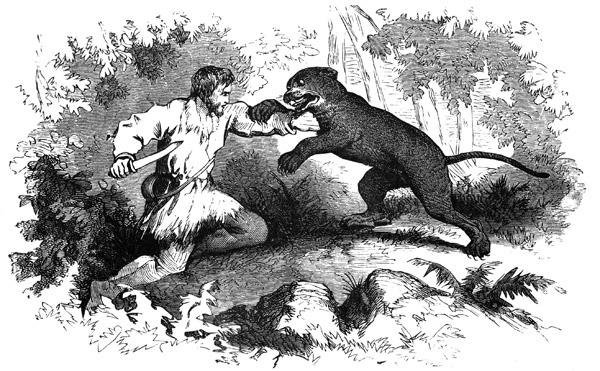
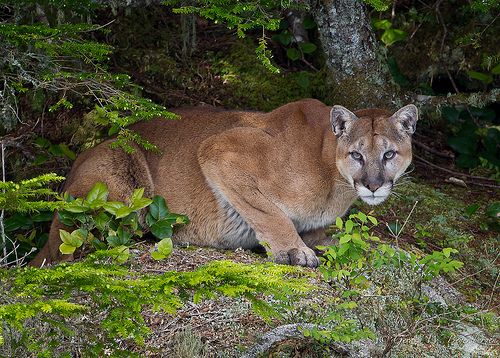
Upton was on edge because there were mountain lions (or Pumas, or Cougars) killing dogs, cats, and chickens in the area. Residents were advised to keep small children and pets inside, and barn doors closed. During this time, Johnny Page and I, both seven years old, were walking along rural Prospect Street to his house. I remember it was a beautiful fall day. There was an open field to the right with a low stone wall, and a hill to the left.  We looked up and immediately froze. About twenty feet away, a huge mountain lion was slowly crossing the street from the field right in front of us. The light brown wild cat stopped and stared at us with his piercing eyes. Clearly he was not afraid of us at all. In fact he looked at us like “Hmm, I wonder what they would taste like.” My legs were shaking uncontrollably, then he continued to amble up the hill and into the woods. At that point we didn’t know what to do. Do we go back down the hill to my house? Or do we forge ahead a quarter mile to Johnny’s house? My mind raced with images from the Davey Crocket TV show where a mountain lion would jump on him from a  hill or a tree. We stood there for a few minutes and then made a run for Johnny’s house, all the while imagining the mountain lion was chasing us the whole way. At the time, every person I shared this story with accused me of making it up. A year later when we moved away, the mountain lions continued to  menace the town. Believe me, I wasn’t lyin’ about the lion

NEXT UP – Bully basher

Upton Stories: The ice skate catastrophe

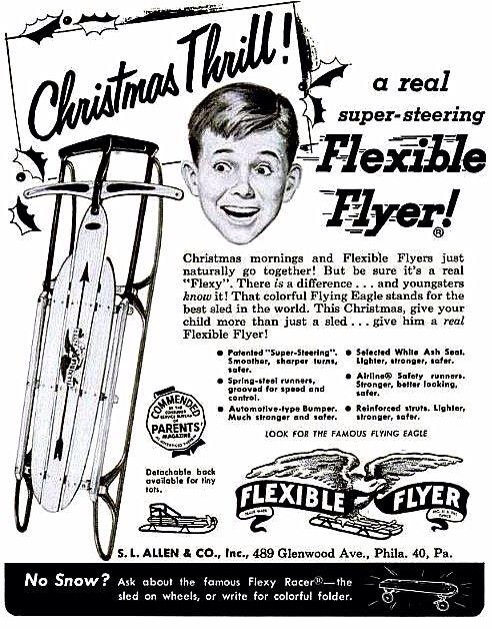
Because we were in New England, and it was often cold and snowy in the winter, sledding, ice skating, and snowball fights were a common activity. We had an extremely long sled run from our house down to the fence at Route 140. We would ride sleds, toboggans, saucers, and even flattened boxes. We also used to pelt cars with snowballs along the highway. Once in a while we would skate at Mill Pond or Kiwanis Lake as a family, but normally we boys skated at our local waterhole we called Frogless Pond, which was probably a mile from our house. I don’t know why we called it that, because most of the year it held plenty of frogs and tadpoles for us to catch and torment. One day we all decided to go ice skating and there were a couple of local older girls who were going to join us. I was about six at the time. One of the girls, who was wearing figure skates with blade protectors, mentioned that you can walk with your skates on, you don’t need to carry your shoes, and it strengthens your calves. I had no idea what a calf was, but I was determined to make mine strong. So I thought it was a good idea. So after I was done skating, rather than put my shoes back on, I decided to walk back home on my hockey skates. Bad idea! My brothers and the girls went on ahead with my shoes while I struggled to walk home. After they got home, apparently my parents asked my brothers where I was. They gave them the lowdown, and my father ran up Wood Street in the freezing snow to find me crying along the side of the road barely able to take another step. He picked me up and carried me home. It felt good to get those skates off, sit by the radiator, have some hot chocolate, and rest those calves.

UP NEXT – The Mountain Lion

Upton, Massachusetts 1956-1962

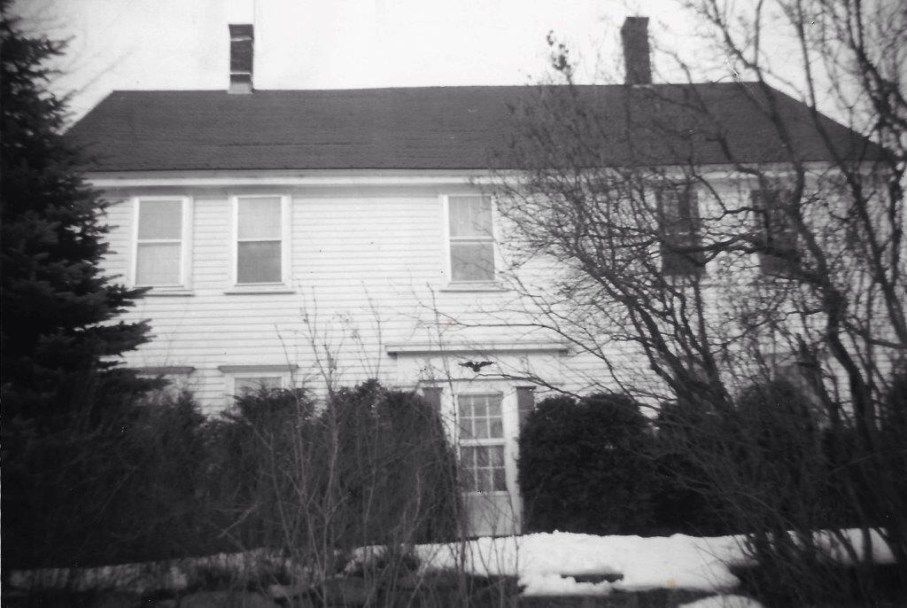
From the mid-fifties to the early sixties, the space race began in earnest. Families started to buy automobiles frequently and there were even a few rich ones who had two. TV shows became a shared event in America with ads featuring jingles that stayed in your head: “Winston tastes good like a cigarette should,” and “See the U.S.A. in your Chevrolet.” Rock and roll started to be played over the airwaves, and African-American artists and athletes became popular for the first time. Housewives dreamt of owning a dishwasher, and as for me, ages three through eight were spent in Upton, a small town in Southeastern Massachusetts. These were my earliest memories. I remember opening the front door for the first time. My brothers were being watched by my parents’ friends and so I alone was there when we first moved in. My parents bought it from a male gay couple who had recently fixed it up and flipped it. It was an old classic New England salt box farmhouse built around 1760 on what was called a “gentleman’s farm,” which is a property with a lot of land, but few crops or farm animals. In other words, it didn’t function as a true money-making farm, it was all for show. In Texas, they would say my father was “All hat and no cattle.” We had eight acres. The white clapboard-sided house had two floors of living space, plus a full walk up attic, and a basement that could only be accessed from the outside. In addition, the property had a chicken coop and a milk house. There was an old utility section attached to the house that was probably once used to stable horses and carriages. There was a fireplace in every room of the house, though all were closed up. There was no air conditioning and there was only heat on the first floor — provided by cast iron steam radiators. There was only one bathroom and no closets. My bedroom wasn’t even a room, it was a sitting area between my two brother’s rooms on the second floor. On the first floor there was a formal foyer, an eat-in kitchen, formal dining room with crystal chandelier, living room, a sunk-in den, and a full bath. When we moved in, there was a turn-of-the-century player piano in the house. It was in good condition and later we found hundreds of player piano song rolls in the attic in great condition. It was like finding a CD collection from a hundred years ago. On the second floor there was a master bedroom, two bedrooms, a guest bedroom and a large sitting area. The attic was huge, and had rooms where apparently servants lived.
Surrounding the house were a number of curious features. There was a sunken garden, an artesian well, and an entrance to the basement that you needed to step over to get to. There were also a number of Classic New England-style stone walls, a barn foundation, and open fields littered with enormous granite stones, blueberry bushes, and junk cars. The house, which sat high on a hill, was the only one on Wood Street at the time, and was built within several feet of the dusty gravel road. I remember it being quite an event when a car passed by. Across the road were the fields to Kelly’s Farm. Wood Street connected to Mass. Route 140 below and to Prospect Street up the hill. The house could be seen from Route 140 as there were open fields up to the sunken garden which led up to the formal entrance to the majestic house. Being a rural setting, the neighboring houses were pretty far away. I would often stand by Route 140 and name the year, make, and model of cars that passed by. I also liked to look at license plates from distant places. My best friend Johnny Page lived up the hill on Prospect. Another friend was John Kelly, the farmer’s son. He worked all the time, so I rarely had the opportunity to play with him. If you want to hang out with John Kelly you had to work with him, not play. He had a surly grandfather who threatened to shoot us with salt pellets if he found us on their property. I still remember helping John clean the cow barns and bale the hay.

NEXT UP – Stories from Upton

Newton, Mass./Burlington, Vt. 1953-1956 – Part 2

During my first three years we lived in two locations, Auburndale and Burlington, Vermont. My family moved to the much bigger house in Auburndale to gain more room because I came along. I only recall a few things from those early years: I remember having a security blanket with me at all times. I sucked my thumb constantly; A lion puppet my brothers used to scare me with (think Pookey from The Soupy Sales Show), being tickled by my brothers for long periods of time (tickle table), and there was a large German Shepard dog in the neighborhood who loved to hump me. At two, I was admitted to the hospital with pneumonia. This must have concerned my father particularly because his mother died a little over a decade earlier from the same condition. Apparently my mother was frustrated because she knew I’d want my blanket there. Every time she’d visit she’d slip me a piece of it. When she returned she’d find out they threw it out.

NEXT UP – Upton, Mass.

The Social Butterfly

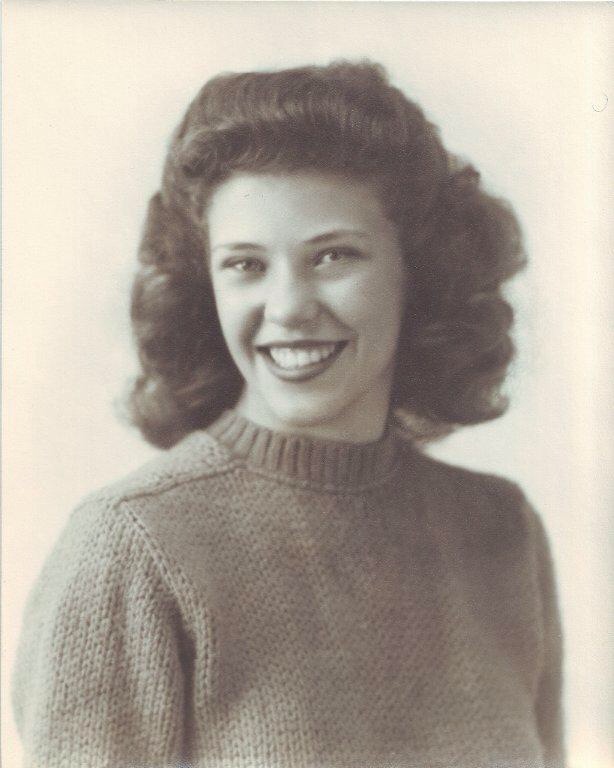
My mother was raised by Weaver T. Darling and Edith Hanna Darling in Eureka, Kansas. He was a Chiropractor and she was a retired school teacher. Like my father’s parents, they also had to be married secretly. While he was completing his education she had to continue to work. At most locations in the 1920’s, teachers were not allowed to be married, so my grandmother had to keep it from nearly everybody she knew to keep from being fired. “Doc” Darling liked to play all kinds of games, and always had a nervous energy that kept him tapping his hands and staying busy. Edith was noted locally as a remarkable gardener and made great peanut brittle. My grandmother’s family had some money because of some successful oil wells they owned in Kansas. They both loved to fish. They were frugal, and managed money very well. My mother was born Joyce Ardith Darling in August of 1929. She had an older brother Dean who was 2 years old. When she was growing up during the depression, because they were living in a farming community, a lot of their income was in the form of trade rather than cash for Doc’s services. They were provided plenty of eggs, meat and milk for food, and Mom never recalls any hardship during that period. Joyce lived a fairly normal middle-class life in middle America. When she was in high school, she was one of the most popular girls. She still has her date book from those days and literally recorded hundreds of dates with boys. Joyce attended Kansas State University where she majored in Physical Education and joined a sorority. After a year, it wasn’t her cup of tea, so she moved back to Eureka. She now found the small town to be boring and yearned for an opportunity to explore the world. That’s when she met Bob Orton, from Boston, on a date. They were married February 27, 1949. He was just 22, she was 19. Since he recently received a large inheritance from his mother’s estate, they decided to take a long honeymoon and reside in California. Needless to say, it didn’t pan out and, after a few months staying in a hotel in San Diego looking for work, plus learning my mother was pregnant, decided to return to Boston to live and raise a family.
Some trivia about influential ancestors and relatives: Edward Orton was the first President of The Ohio State University. The oldest building on campus is named after him; Vrest Orton, my great uncle was an author and founded the Vermont Country Store as well as the Orton Foundation which is committed to protecting old buildings and keeping small businesses viable in Vermont and Colorado. His books can still be bought on Amazon; My uncle Dean Darling became a Life Master Bridge Champion. Partially deaf, he was banned from several Las Vegas casinos because of his ability to count cards.

NEXT UP – Back to little me

Boston Bob

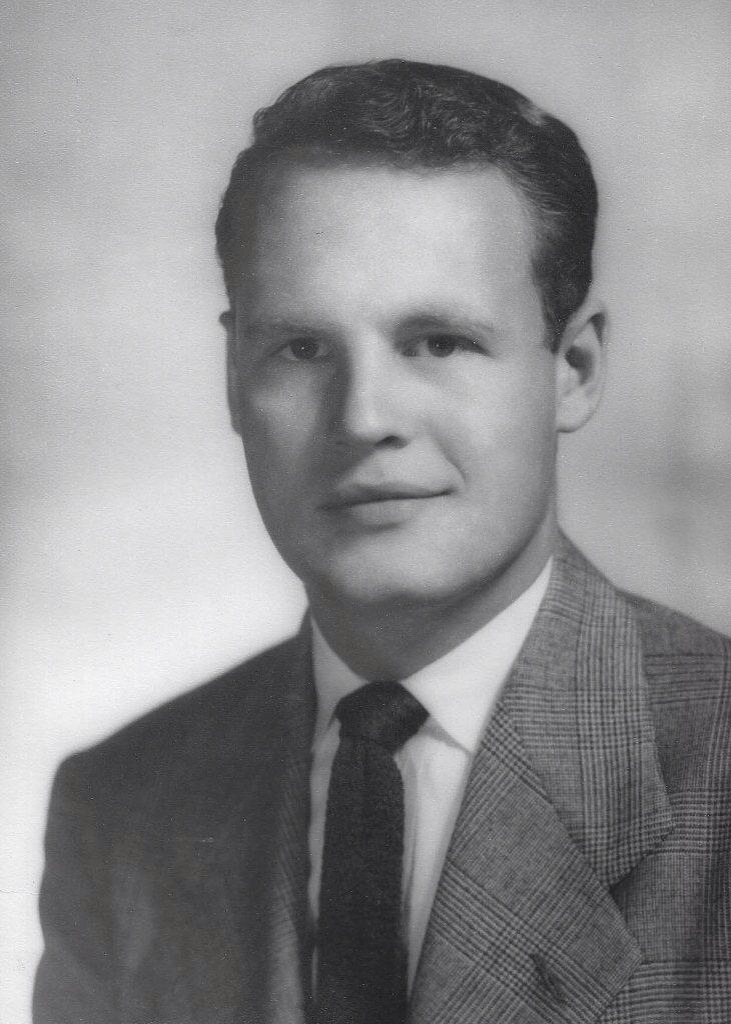
My father’s upbringing was far from normal. His father, Lyman Ross Orton and his mother Sidnia Butler Orton (Syd) met while he was in residency and she was a senior at the University of Maryland. Sidnia was in the first graduating class of women of the school in 1922. They were married in secret January 1st of that year because they were afraid they would be expelled if anyone found out. It made the Baltimore newspapers as a scandal when it was finally found out after Lyman and Sidnia both completed their studies. They lived in Wakefield, Massachusetts. Lyman became a surgeon who was also the MD in charge of the state’s public school heath program. From a personal standpoint, Lyman was great at making furniture and was quite a good musician, specializing in the violin. In 1927, Bob Orton was born. On January 13, 1933, when Bob was five, he discovered his father’s slumped body in his office. The official cause of death was heart attack, but many speculated he overdosed on morphine. Sidnia moved to Cambridge and worked as an art director for a major clothes retailer’s advertising department. My father attended The Nichols School, an exclusive private school located nearby on the Harvard University campus. Sidnia remarried a few years later to Leon Strauss, part owner of her company, while she continued to work in the advertising business in Boston. In 1942, when my father was only 14, Sidnia, who had recently retired and was only 44, died of pneumonia at a hospital in Salem, Mass. Because Leon vowed to take care of Bob’s education and watch over his inheritance until he was 21, he sent him to Cheshire Academy, a private boarding school in Connecticut where he was involved in football and baseball and was known to be a cheapskate on campus by his peers. After graduation, he attended Tufts University for a term. In late 1945 my father enlisted in the Marines and after boot camp at Paris Island, was stationed in Hawaii on the way to finish off Japan in 1946. Then Harry S Truman dropped the atomic bombs. Had it not been for that, I may not have been born. Returning from war Bob then finally graduated with a degree in business from the Babson Institute. While in college in Kansas, he met my mother. Interesting side note: Kansas? But Babson is in Boston right? Another interesting tale that involves atomic bombs. While my father was attending Babson, the Soviets has gotten ahold of the secrets and made their own H-Bomb. The founder and Dean of the Babson Institute, Roger Babson, decided it would be a good idea to have a second campus in an area not likely to be bombed by the Reds. As the story goes, he threw a dart at a map of the US and hit little Eureka, Kansas, where one young, popular, pretty, and fun-loving Joyce Darling lived.

NEXT UP – The Social Butterfly

Newton, Mass./Burlington, Vt. 1953-1956 – Part 1

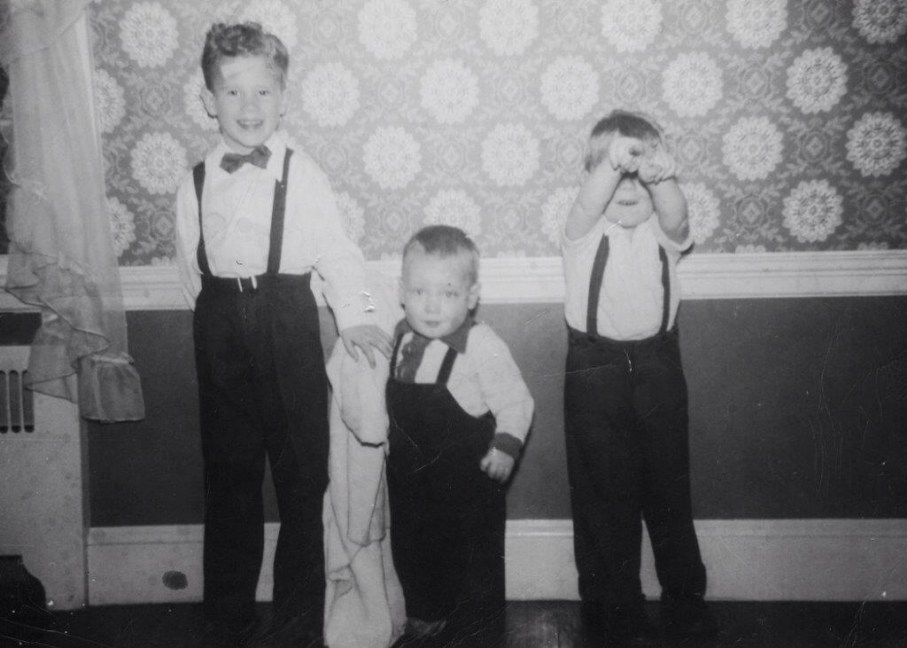
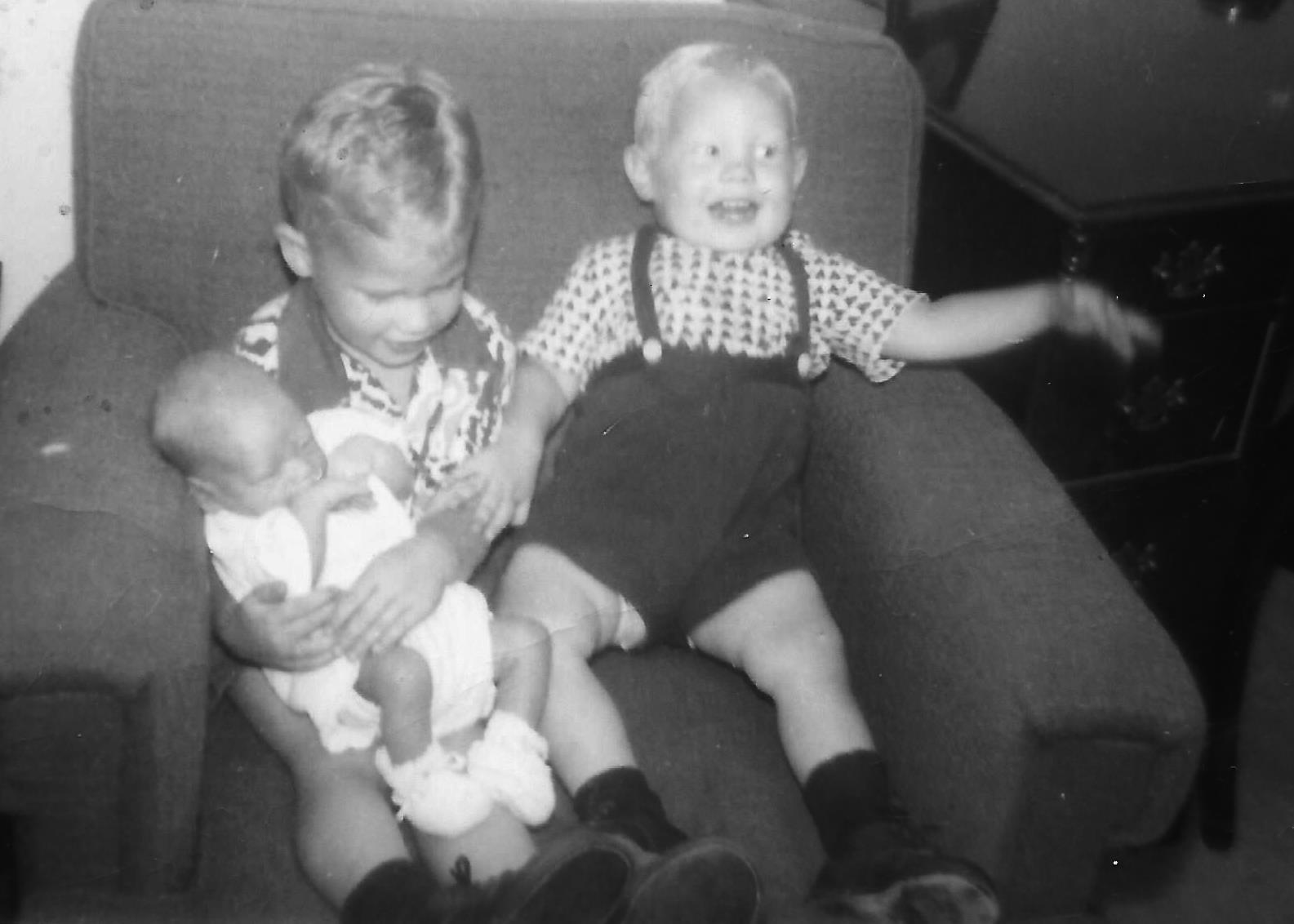
Three-year-old Kent holding one-month old me, sitting with 18 month old Brad in our house in Newton Highlands, Mass.

Three-year-old Kent holding one-month old me, sitting with 18 month old Brad in our house in Newton Highlands, Mass.

I was born Saturday, August 8, 1953 at the Newton-Wellesley Hospital in Newton, Massachusetts, about ten miles outside of Boston. I found out later there were many more successful adults born there including John Krasinski and B.J. Novak from The Office, Matt LeBlanc, Jack Lemmon, and Robert Preston to name a few. My parents were 26 year-old Robert Kent Butler Orton (Bob) and his 23 year-old wife Joyce Ardith Darling Orton. I had two brothers, Robert Kent Butler Orton, Jr. (Kent) who was three years old, and Bradford Lee Ross Orton (Brad) who was only a year and a half old. My sister Lisa Cheryl Orton (later Arge) would be born eight years later. To be consistent with the family practice of males having three names, I was named Mitchell Marc Lindsey Orton. I wasn’t named after anyone in particular – they were just considered to be cool names at the time. Marc in particular was a very popular name then, though not spelled the same. As of this writing, every Mark/Marc I know was born in the 50’s and early 60’s. The name was so popular in fact, my parents decided to go with the flow and call me that. It was an annual ritual on the first day of school to hear the new teacher call out “Mitchell Orton?” to giggles in the room. The only person that continues to call me that is my clever sister-in-law, Holly Fineberg. My 8th grade teacher, Mr. Hugh McCotter, realized I hated it, and never missed an opportunity to torture me by calling me that the entire school year. In my 5th grade classroom, there were six other Marks. At work today, there are at least a dozen in my building. Ironically, I did not have a single Mitchell in any class, at any job in my career. Go figure!

For a brief time we were living in a Cape Cod-style house in Newton-Highlands, Massachusetts. All three boys shared a bedroom in the dormered second floor. I don’t remember anything about the house, but I have seen pictures. There was a friendly young family two doors down, The Johnson’s, who would impact our lives 25 years later. A few months after my birth, we moved to a larger home in Auburndale, a section of Newton not far away. Newton was then, and still is, a highly desirable and expensive place to live. For you trivia buffs, it is also where the name of the cookie Fig Newtons comes from. The company who originally created them liked the idea of naming their treats after local towns.

NEXT UP – My father, Boston Bob

1953

Like a Phoenix rising above the ashes, life in the middle of the 20th century was filled with hope and an opportunity for the world to be reborn. After the Depression, two world wars, and the Korean Conflict, America was ready to start the process of building a modern world. It was the beginning of the Interstate Highway System under new President Dwight D. Eisenhower, polio was being cured, antibiotics were being developed, car styles were drastically redesigned every year, a 27-year-old Queen Elizabeth II was crowned, and television was beginning to be in every home. The space program was being talked about, millions of houses were being built, and the baby-boom was at its peak. We still had mostly one-car families, stay-at-home housewives and mothers, and corporal punishment in schools. We didn’t have air conditioning, smoke-free environments, stereos, color TVs, or seat belts. People didn’t use credit cards, go jogging, or visit the gym. Women didn’t wear pants in public, pets ran loose, and men wore ties and hats all the time — to work, to eat out, even to baseball games. There was no fast food, no clean air standards, no accepted sensitivity to minorities or women, and men rarely sported facial hair. People got most of their news from the newspapers and magazines like Life, Look and Time. The 1950’s did have atomic bomb drills due to the Red Scare. The era had soda fountains and the beginning of rock and roll. Rock Around the Clock, the very first rock and roll hit, was recorded just eight months after I came into the world. This was a great time to be born and start my life — a great time to experience change and the evolution of mankind into the 21st century’s Information Age. 1953 was also the birth year for a lot of things that impacted our culture: The Chevrolet Corvette, James Bond, Playboy Magazine, transistor radios, the discovery of DNA, and the polio vaccine. Unemployment was 2.9%, the average cost of a house was $9,550, and the average worker made $4,000 a year. Gasoline was 20 cents a gallon, and the average new car was only $1,650. You could actually buy a color TV in 1953. It cost $1,175, which would be equal to over $10,000 in 2014. For a synopsis of 1953, here is a You Tube link to the year in review: https://www.youtube.com/watch?v=0b3-kjgVULQ

My Memoir

Greetings everybody. Over the next year I will be blogging about my first 20 years on earth from 1953-1973.