NEXT UP – The Fire!
The 1950’s diet
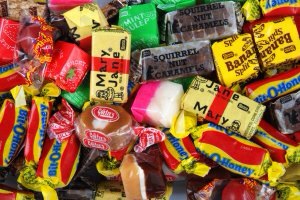
I remember going with Mom every week to the A&P in Milford to go grocery shopping. The Atlantic and Pacific Tea Company, which is what it was called at the time, was the largest grocery store chain in the country. It was probably a quarter of the size of grocery stores today and had narrow aisles. But they took S&H Green Stamps. Green stamps were collected and glued into books that would allow customers to trade in filled books for merchandise. Back in the 50’s and 60’s, housewives usually cooked at least six days out of seven. The seventh day was usually set aside for finishing off left-overs, or frozen food like chicken pot pies. There were no fast food restaurants, and there were no restaurants that catered to families with children. This meant children had to be taught manners before they were allowed to eat out. Mom was a good cook though, and used to have several meals she was adept at making that suited us fine. They were: fried chicken with white gravy, Hungarian goulash, meat loaf, pot roast, and shrimp. We rarely had steaks or salads. Periodically she would make a horrible meal like liver, but that was rare. Peas, potatoes, squash, and green beans were a common side, and we always had whole milk to drink. Back in those days, people did not buy milk at the grocery store, that was delivered directly to your house once a week by a milk man. There was a metal box at our front door that was used to put our used glass bottles and a place for him to place our usual order of three quarts of milk and one chocolate milk. The only dessert we had was birthday cake, so that tells you how often that was served. For breakfast it was always some sort of cereal. My favorites when I was young were Alpha-Bits and Sugar Smacks. Once in a while Mom would make a pot of Quaker Oats oatmeal, the kind that came in the large round container. Once in a while on a weekend, she would make a big breakfast that might include waffles, bacon, and eggs. Because of Dad’s New England influence we would always had baked beans and brown bread available. Brown bread is the only bread that I know of that comes in a can. During my elementary school years we ate in an assembly room and brought our own lunch. The school would sell a half pint milk carton for four cents. Kids that had a dime could buy an ice cream sandwich or a small container of chocolate and vanilla ice cream with a little wooden spoon. We were never a lunch box kind of family, although I was attracted to the idea, and was often jealous of those kids that had them. For me it was always a brown paper bag stapled at the top. Candy was a whole different area. We rarely had the huge candy bars, which were a nickel back then, but we typically had an opportunity to buy penny candy which was exactly that, one cent a piece. Rexall had a candy counter. This was the procedure: you would approach the counter and say you wanted to buy some candy. The clerk would then pick up the smallest paper bag you ever saw. You would then identify to the clerk what you wanted. “Two root beer barrels, two Mary Janes, five Bazooka bubble gum, five caramels, three Smarties, two Bit-O-Honeys, four wax lips, one Jaw Breaker, and one Red Hot. Here’s a quarter.” If we had more money, we might spring for a pack of Winston candy cigarettes or a giant box of Dots. Also worth noting, there was no sales tax then. If we had another fifteen cents we might go for a comic book. When you’re seven years old in 1960 and you had fifty cents, you could live like a king — Take the bike ride home, pour the candy on your bed and spread open the comic. It’s going to be a great day!
 marcorton8853
Ahhhh…penny candy. Sorry that tradition went away. I remember it fondly and well. Can almost still taste all of those penny treasures.
LikeLike